

Getting a dental implant is a big step toward a stronger smile. If you smoke, your daily habit can shape how well your implant heals and how long it lasts. You deserve clear facts before you commit to treatment.
Smoking lowers blood flow, slows healing, and raises the risk that a dental implant will fail, both early and years later.
Studies show smokers face higher rates of infection, bone loss, and implant failure than non-smokers, especially with heavier use, as shown in research on smoking and dental implant failure rates.
Even light smoking can disrupt how your implant bonds with bone, which affects long-term stability, as explained in how smoking impacts dental implant success.
You still have options, and your choices play a major role in smoking and dental implant success.
Knowing how smoking affects healing helps you protect your investment and improve your outcome, including timing, daily habits, and support to cut back or quit, as outlined in guidance on smoking after dental implant surgery.
Key Takeaways
- Smoking slows healing and weakens implant stability.
- Heavier smoking increases the risk of implant failure.
- Reducing or stopping smoking improves long-term success.
Understanding Dental Implants and Healing
Dental implants rely on healthy bone and gums to stay stable. Healing depends on how your body responds, how well the bone bonds to the implant, and daily habits that support or slow recovery.
What Are Dental Implants?
Dental implants replace missing teeth using a small post, a connector, and a crown. A dentist places the post into your jawbone, where it acts like a tooth root. This design gives implants strong support and helps protect nearby bone.
Most implants use titanium because bone accepts it well. The goal is long-term implant stability, not a quick fix. Implants differ from bridges because they do not rely on nearby teeth.
You need enough bone and healthy gums before surgery. Conditions like gum disease or heavy smoking can raise risks. Dentists often review these issues first because they affect dental implant healing.
The Healing Process: Osseointegration

Healing starts right after surgery and continues for several months. During this time, osseointegration occurs. Your bone grows and locks onto the implant surface.
This bond keeps the implant from moving during chewing. If the bond stays weak, the implant can loosen or fail. Blood flow and oxygen are key to this process.
Smoking reduces blood flow and slows bone repair, which can interrupt osseointegration. Many dental studies show higher failure rates in smokers during early healing, as explained in research on how smoking affects dental implant healing.
Factors Influencing Implant Healing
Several factors shape how well you heal after implant surgery. Some relate to your health, while others depend on daily care.
Key factors include:
- Bone quality and bone volume
- Gum health and infection control
- Smoking or tobacco use
- Medical conditions like diabetes
- Oral hygiene habits
| Factor | Effect on Healing |
| Smoking | Slows healing and weakens bone bonding |
| Good hygiene | Lowers infection risk |
| Healthy bone | Improves implant stability |
Dentists often stress smoking limits because tobacco raises the chance of infection and implant failure. Clinical data show smokers face higher failure rates than non-smokers, according to findings on implant success in smokers versus non-smokers.
How Smoking Disrupts Implant Healing
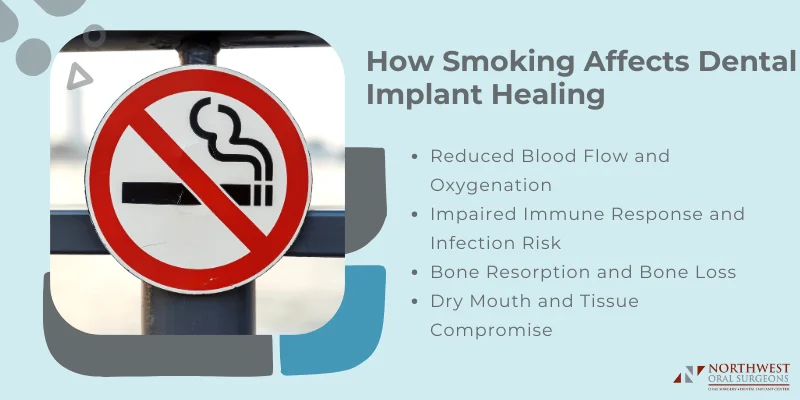
Smoking changes how your body heals after implant surgery. It limits blood flow, weakens defense against infection, harms bone healing, and dries out oral tissues, all of which reduce implant stability and raise the risk of dental implant failure.
Reduced Blood Flow and Oxygenation
Smoking narrows blood vessels in your gums and jawbone. This reduces the oxygen and nutrients that reach the implant site. Bone healing depends on steady blood flow, especially in the first weeks after surgery.
When oxygen levels drop, your body struggles to form strong bone around the implant. This slows osseointegration and makes early implant movement more likely.
Studies on smoking and dental implants show higher failure rates during early healing when blood supply stays limited, as reported in a recent systematic review on smoking and dental implant failure.
Poor blood flow also delays soft tissue healing. Gums may take longer to seal around the implant, leaving gaps that invite bacteria.
Impaired Immune Response and Infection Risk
Smoking weakens how your immune system works in the mouth. White blood cells become less effective, and inflammation lasts longer than it should.
This raises your risk of infection around the implant. Infection during healing can damage bone and soft tissue fast. Common problems include swelling, delayed closure, and early implant loss.
Key effects you may notice include:
- Slower wound healing
- Higher chance of gum infection
- Greater risk of dental implant failure
Clinical guidance on how smoking impacts dental implant success links these immune changes to higher complication rates, especially in the first few months after surgery.
Bone Resorption and Bone Loss
Smoking increases bone resorption, which means your body breaks down bone faster than it rebuilds it. Around implants, this leads to marginal bone loss.
Stable implants need healthy bone contact on all sides. When bone thins or pulls away, implant stability drops. Over time, this can cause loosening or failure, even if the implant felt solid at first.
Heavier smoking shows a stronger effect. Research notes a dose-response pattern, where more daily cigarettes increase bone loss and failure risk, as discussed in articles on smoking and implant success risks.
Bone loss often starts quietly. X-rays may show changes before you feel symptoms.
Dry Mouth and Tissue Compromise
Smoking dries out your mouth by reducing saliva flow. Saliva protects tissues, controls bacteria, and supports healing.
With dry mouth, your gums become more fragile. Small injuries heal slower and tear more easily. This weak tissue seal around the implant allows bacteria to reach deeper areas.
Dry conditions also increase plaque buildup. More bacteria near the implant raises the risk of inflammation and bone damage. Patient-focused guidance on what happens if you smoke with dental implants explains how tissue breakdown and infection often follow untreated dryness.
Healthy moisture supports long-term implant success. Smoking works against that balance.
Book an appointment at our Munster, IN or Schererville, IN office to review your habits, risk factors, and steps to improve implant outcomes.
Smoking and Dental Implant Failure Rates
Smoking changes how your body heals after implant surgery. Research shows higher implant failure rates in smokers, lower implant survival, and more problems early and late after placement.
Evidence Linking Smoking to Higher Failure Rates
Strong clinical evidence links smoking to higher dental implant failure rates. A large 2024 systematic review found a clear connection in 25 of 33 studies, covering more than 29,000 implants. Smokers showed higher implant failure during early healing and long-term use, along with lower implant survival rates.
Many studies also report a dose–response effect. As daily cigarette use increases, implant success rates drop. Heavy smokers face much higher risks than light smokers or non-smokers.
This pattern appears across different implant types and follow-up periods, strengthening the findings reported in “The Effects of Smoking on Dental Implant Failure,” published on PubMed.
Comparing Outcomes: Smokers Versus Non-Smokers
When researchers compare smokers and non-smokers, the differences are consistent. Smokers have lower implant survival and a higher overall implant failure rate. Some reviews report that implants in smokers fail more than twice as often as those in non-smokers.
Key outcome differences often include:
| Outcome Measure | Smokers | Non-Smokers |
| Implant survival rate | Lower | Higher |
| Early implant failure | More common | Less common |
| Long-term implant success | Reduced | More stable |
These trends are observed across multiple study designs, including cohort and observational studies, as summarized in “The Influence of Cigarette Smoking on Dental Implant Survival Rates” from the University of Münster.
Timeframe of Elevated Risks After Surgery
The risk of implant failure rises soon after surgery if you smoke. Several studies define early failure as implant loss within 3 to 12 months, often before full loading. During this period, smokers show higher failure rates and slower integration with bone.
One study found smokers were about twice as likely to experience early implant failure. Others report that each added pack-year increases risk. Late implant loss also increases over time, reducing long-term implant survival.
Reviews focused on early outcomes, such as Smoking in relation to early dental implant failure, highlight that the first year after surgery carries the greatest risk for smokers, especially for those who continue smoking during healing.
Complications Associated with Smoking After Implant Placement
Smoking changes how your gums and bone respond after implant surgery. It raises the risk of infection, increases bone loss, and makes early warning signs harder to spot during dental exams.
Increased Risk of Peri-Implantitis
Smoking increases your risk of peri-implantitis, a serious infection that affects the gum and bone around an implant. Nicotine reduces blood flow, which limits oxygen and slows your body’s ability to fight bacteria.
Research shows smokers face a higher rate of implant failure, especially with heavier smoking.
One large review found that people who smoke heavily have a much higher risk of implant loss than non-smokers, especially when they smoke 20 or more cigarettes per day, as explained in this review on the influence of smoking on implant therapy.
Peri-implantitis often starts quietly. Smoking can hide symptoms like redness and swelling, which delays diagnosis and treatment.
Marginal Bone Loss and Bone Loss Around Implants
Smoking directly affects bone healing and stability. It interferes with osseointegration, the process where the implant bonds to your jawbone. When this process weakens, peri-implant marginal bone loss becomes more likely.
Studies consistently show more bone loss around implants in smokers than in non-smokers. Bone loss can progress even when the implant feels stable at first. Over time, this loss reduces support and raises the chance of implant failure.
If bone loss continues, treatment becomes more complex. This may involve bone grafting or implant removal. Quitting smoking improves bone response and supports long-term implant health.
Peri-Implant Mucositis and Inflammation
Peri-implant mucositis causes inflammation in the soft tissue around your implant without bone loss. Smoking increases the risk by weakening your immune response and changing how your gums react to plaque.
Inflamed tissue may look pale instead of red in smokers. This can make inflammation harder to notice during routine exams. Even so, swelling and tenderness still develop under the surface.
If mucositis is not treated, it can progress to peri-implantitis. Early care, good oral hygiene, and smoking cessation play a key role in preventing peri-implantitis and protecting your implant.
Plaque Accumulation and Bleeding on Probing
Smoking increases plaque buildup around implants by changing saliva flow and encouraging harmful bacteria. Dentists often measure this with a plaque index, which tends to be higher in smokers.
Plaque leads to gum irritation and infection. During dental exams, providers check for bleeding on probing to assess gum health. Smoking may reduce visible bleeding, even when disease is present.
This false sense of health can delay care. Regular cleanings and daily brushing and flossing help control plaque and lower your risk of implant complications.
Treatment Considerations and Improving Success for Smokers
You can improve implant outcomes with the right timing, planning, and care. Dentists adjust treatment steps to protect bone healing, support implant stability, and lower risks tied to smoking.
Smoking Cessation Timing and Its Benefits
Quitting smoking before surgery gives your body time to improve blood flow and oxygen levels. These changes help early dental implant healing and reduce infection risk.
Studies show smoking raises failure risk by slowing healing and raising infection rates, which many clinicians review when planning care for smokers, including findings summarized in reviews on smoking and dental implant failure risk.
Dentists often recommend stopping at least 2–4 weeks before surgery and staying smoke-free for 8–12 weeks after. Even short-term quitting helps. If full cessation feels hard, reducing daily cigarettes still supports better healing compared to continued heavy use.
Every patient’s situation is different, especially when lifestyle habits affect recovery. Schedule a visit at Nortwest Oral Surgeons to discuss your health history and create a plan designed for the best implant outcome.
Bone Grafting and Managing Poor Bone Quality
Smoking can lower bone density and slow new bone growth. When bone quality looks weak, your dentist may suggest bone grafting to improve support before or during implant placement. Grafts provide the implant with a stronger base and support long-term stability.
Common graft options include:
- Autografts (your own bone)
- Allografts (donor bone)
- Synthetic materials
Smokers often need more healing time after grafting. Research on periodontal and implant therapy shows smokers heal less predictably and may see less bone gain than non-smokers, as described in this review on smoking and implant therapy outcomes.
Special Clinical Protocols for Smokers
Dentists often change how they place and load implants for smokers. These steps aim to protect early healing and reduce stress on the implant.
Common adjustments include:
| Protocol change | Why it helps |
| Slower drilling speeds | Limits bone heat and damage |
| Longer healing before loading | Supports stronger bone bonding |
| Fewer implants per visit | Lowers surgical stress |
| Strong oral hygiene plans | Reduces infection risk |
Smoking limits blood flow, which affects healing. Clinical guidance explains how smoking slows healing and raises complications during implant care, as outlined in how smoking affects dental implant success.
Extended Healing and Follow-Up Care
As a smoker, you usually need more time for full integration between bone and implant. Dentists often delay placing the final crown to protect implant stability. This longer wait helps bone mature and lowers early failure risk.
Follow-up visits matter more for you. Dentists check gum health, bone levels, and bite force more often. Professional cleanings also play a bigger role because smoking masks early gum inflammation. With close monitoring and steady home care, you give your implant the best chance to heal and last.
Long-Term Outcomes and Prevention Strategies
Your daily habits after healing shape implant success rate and implant survival over time. Smoking raises specific risks, but you can lower them with steady care, early action, and regular dental support.
Maintaining Implant Success Post-Recovery
Once dental implant healing ends, long-term implant survival depends on stable bone and healthy gums. Smoking can reduce blood flow, which weakens bone support over time.
Studies show smokers face a higher risk of late implant failure compared to non-smokers, including nearly double the failure risk in long-term follow-up from research on smoking and implant survival.
You can protect your implant by limiting or stopping smoking, especially during the first year. Even cutting back helps bone stay stronger around the implant. Good chewing habits matter too. Avoid biting hard items like ice, pens, or hard candy, which can overload the implant and crown.
Regular Monitoring and Hygienic Practices
Preventing peri-implantitis plays a key role in keeping implants stable for years. Smoking increases plaque buildup and infection risk by slowing gum healing and weakening immune response, as explained in reviews on how smoking affects dental implant success.
You should follow a strict daily cleaning routine:
- Brush twice a day with a soft toothbrush
- Use interdental brushes or floss designed for implants
- Rinse with a dentist-approved antimicrobial rinse
Professional care matters just as much. Schedule checkups every 3 to 6 months so your dentist can track bone levels, clean hard-to-reach areas, and spot early signs of inflammation before damage spreads.
Recap: Key Prevention Tips for Smokers
You can improve the implant success rate even if you smoke by focusing on specific prevention steps supported by clinical findings on smoking and implant healing outcomes.
Most effective strategies include:
| Action | Why It Matters |
| Reduce or quit smoking | Improves blood flow and bone support |
| Keep excellent oral hygiene | Lowers infection risk |
| Attend regular dental visits | Detects early implant problems |
| Report gum changes early | Prevents bone loss |
Small changes, done daily, can make a real difference in long-term implant survival and help you avoid avoidable complications.
You don’t have to figure this out alone. Book a consultation and get clear, supportive guidance on improving your chances of implant success before treatment begins.
Frequently Asked Questions
Smoking changes blood flow, slows healing, and raises the risk of implant problems. Clear timing, risks, and practical steps can help you protect your implant if you smoke.
Can smoking affect the healing time after getting an implant?
Yes. Smoking reduces blood flow to your gums, which slows how fast your body repairs bone and tissue. This delay can affect how well the implant bonds with your jaw.
Studies show smoking increases the risk of early healing problems and infection during implant recovery, as explained in this guide on smoking after dental implants and healing.
What are the potential complications of smoking on dental implant procedures?
Smoking raises the risk of infection, poor bone bonding, and gum inflammation. These issues can cause pain, swelling, or early implant failure.
Nicotine also limits oxygen in your blood, which makes it harder for surgical sites to heal, according to research on how smoking impacts dental implant success.
Is there a difference in success rates of implants between smokers and non-smokers?
Yes. Non-smokers have higher implant success rates than smokers. Research shows smokers experience more early and late implant failures.
A large review found a clear link between smoking and higher implant failure, including a dose effect where heavier smoking increases risk, as reported in this review of smoking and dental implant failure rates.
How long should I wait to smoke after receiving an implant?
Most dentists advise avoiding smoking for at least one to two weeks after surgery. This period allows early healing and reduces infection risk.
Some providers recommend stopping smoking even longer to protect long-term implant stability, as discussed in this overview of smoking and implant healing timelines.
What can I do to improve implant healing if I am a smoker?
You can stop or reduce smoking before and after surgery. Even short-term quitting helps improve blood flow and healing.
You should also follow oral hygiene instructions, attend follow-up visits, and talk honestly with your dentist, as suggested in this article on dental implants for smokers and healing tips.
Are there any specific guidelines for smokers who are considering getting an implant?
Yes. Dentists often recommend quitting smoking several weeks before implant surgery and continuing to avoid it during healing. Some may delay treatment if smoking risks are high.
Open discussions with your dentist help tailor care to your needs, as explained in this guide on smoking and dental implant risks.