

A low-cost dental implant might seem like a smart way to save money when you need to replace missing teeth. But the initial savings can disappear quickly if you end up dealing with infections, implant failure, or the need for additional surgeries down the road.
Cheaper implant options often carry higher long-term risks because they may use lower-quality materials, less experienced providers, or skip important planning steps that protect your health and investment.
The real question isn’t just about the upfront price. You need to understand what drives implant costs and how cutting corners can affect your jawbone, your bite, and your wallet over the next 10 to 20 years.
Low-cost implants can increase the risk of complications that end up costing more than choosing quality care from the start.
This article walks you through the hidden costs and medical risks of bargain implants, what makes some options safer than others, and how you can save money without compromising your oral health.
You’ll learn what red flags to watch for and which alternatives give you lasting results without breaking your budget.
Key Takeaways
- Cheaper dental implants often use lower-quality materials and less experienced providers, which increases your risk of failure, infection, and bone loss over time
- The long-term costs of repairs, replacements, and corrective procedures from budget implants can exceed what you would have paid for quality care initially
- Choosing experienced professionals, premium materials, and comprehensive treatment planning protects both your health and your finances for decades
How Implant Costs Affect Safety and Success
The cost of dental implants directly reflects the quality of materials used, the expertise of your dental team, and the level of care you receive throughout treatment. When prices drop significantly below average, important safety measures and quality standards may be compromised.
What Contributes to Lower Implant Costs?
Several factors can reduce the dental implant cost you see advertised. Some providers use less established implant brands that lack long-term clinical data to support their reliability. These systems may not have undergone the same rigorous testing as premium options.
Your dentist’s training and experience also affect pricing. Providers who haven’t completed advanced implant education or who perform fewer procedures may charge less than specialists who invest in ongoing training.
Diagnostic planning represents another area where costs vary. Comprehensive treatment includes 3D imaging and detailed surgical planning. Low-cost dental implants might skip these essential steps to reduce the price you pay upfront.
The location of your treatment matters too. Dental tourism can offer bargain dental implants abroad, but follow-up care becomes difficult. Mini implants cost less than traditional implants but aren’t suitable for all situations.
Hidden Costs of Discount Implants

What looks like a good deal initially can lead to unexpected expenses. Many bargain dental implants don’t include necessary diagnostic scans, surgical guides, or temporary teeth in the quoted price.
You might pay extra for:
- CBCT scans and imaging
- Bone grafting if needed
- The crown or bridge that attaches to the implant
- Follow-up appointments and adjustments
- Corrective treatment if complications arise
Choosing the lowest price can mean higher complication rates and more rework. If your implant fails, you’ll need removal, bone grafting, healing time, and replacement surgery. These corrective procedures often cost more than choosing quality treatment from the start.
Most dental insurance covers only a portion of implant costs. Financing options can make treatment more affordable without sacrificing quality.
Risks of Cutting Corners with Materials and Experience
The materials used in your implant directly impact success rates. Titanium implants have a 95% success rate after ten years, but cheaper alternatives show lower success rates.
Poor-quality materials or lack of experience increase your risk of complications. Your implant might not bond properly with your jawbone, leading to failure. Infection around the implant, called peri-implantitis, becomes more likely with substandard components.
Improper placement can damage nearby teeth or nerves. Your dentist needs precise surgical skills and proper planning tools to position implants correctly.
Less experienced practitioners may not recognize when bone grafting is necessary before implant placement. Skipping this step compromises your implant’s foundation and increases failure risk significantly.
Comparing Cheaper vs. Quality Dental Implants
The price gap between budget and premium dental implants reflects real differences in materials, surgical expertise, and technology used during your procedure. These factors directly impact how well your implant performs over the years.
Material Quality: Titanium vs. Budget Alternatives
Premium dental implants typically use high-grade titanium or zirconia materials that your body accepts more readily. These quality dental implants offer better biocompatibility, which means your jawbone fuses more successfully with the implant post.
Budget alternatives sometimes use lower-grade titanium or titanium alloys with less pure compositions. While they cost less upfront, these materials may not integrate as well with your bone tissue.
Titanium implants form the foundation of the entire system, acting as the artificial root that holds everything in place.
The surface treatment on premium implants also differs from cheaper versions. Higher-quality options feature advanced surface textures that encourage faster bone growth around the post. This makes a real difference in how stable your implant feels when you eat or speak.
Expertise Matters: How Dentist Experience Changes Results
Your surgeon’s skill level plays a huge role in implant success rates. Experienced professionals in implant dentistry may charge more, but they bring proven techniques and lower complication rates to your procedure.
Surgical expertise significantly influences the final price of dental implants. Specialists who have placed thousands of implants know how to handle unexpected challenges during surgery. They can adjust placement angles and depths to match your unique jaw structure.
Budget providers might be newer to implant surgery or perform fewer procedures each year. This affects their ability to predict potential problems or handle complications smoothly during your dental implant surgery.
Technology and Surgical Planning Differences
Premium implant dentistry often includes advanced imaging and computer-guided planning before your surgery. 3D scans create a detailed map of your jawbone, showing exactly where nerves and sinuses are located.
Guided implant surgery uses this digital planning to create surgical guides that direct the precise angle and depth of implant placement. This implant technology reduces the risk of nerve damage or improper positioning that could cause problems later.
Budget options may skip these technological steps to keep costs down. Your dentist might rely on standard X-rays and freehand placement techniques instead. While some experienced surgeons work successfully this way, it leaves more room for human error during the procedure.
Long-Term Risks and Complications of Low-Cost Implants
Choosing a cheaper implant can lead to serious problems that develop months or years after placement. You may face implant failure, infections, bone loss, and mounting repair costs that far exceed what you saved initially.
Shortcuts and Rise in Implant Failure
Budget implant providers often skip important diagnostic steps that predict success. You might not receive a CBCT scan to assess bone density or identify nerve locations before surgery.
When your dentist rushes placement or skips a necessary bone graft, the implant may not achieve proper osseointegration. That means the titanium post never bonds securely with your jawbone.
Implant failure typically shows up as loosening, tilting, or complete loss of the implant within the first few years. You’ll need removal surgery, which causes additional bone loss and requires months of healing before you can try again.
Inferior materials also raise failure rates. Off-brand titanium or poorly machined components create gaps where bacteria collect and mechanical stress concentrates, leading to early breakdown.
Complications: Infection, Nerve and Sinus Damage
Low-cost clinics may compromise on sterility protocols or surgical precision to keep prices down. That increases your risk of peri-implantitis, an infection that inflames the gum and bone around your implant.
Common infection symptoms include:
- Swelling and tenderness around the implant site
- Bleeding gums when you brush
- Pus or discharge near the implant
- Progressive loosening of the restoration
Nerve damage can occur when implants are placed too close to the inferior alveolar nerve in your lower jaw. You might experience numbness, tingling, or pain in your lip, chin, or tongue that lasts weeks or becomes permanent.
Upper implants placed without proper planning can penetrate your sinus cavity. You’ll need a sinus lift procedure to repair the damage, along with bone grafting and implant repositioning. Each corrective step adds surgical risk and expense.
Impact on Jawbone and Bone Loss Over Time
Your jawbone needs mechanical stimulation from a stable, well-fitted implant to maintain its density. When a cheap implant has poor surface quality or incorrect placement angles, the bone doesn’t receive proper loading forces.
Bone loss accelerates around failed or infected implants. You may lose several millimeters of vertical bone height each year, weakening support for neighboring teeth and making future implant placement much harder.
Peri-implantitis creates a cycle of inflammation and bone destruction. The infection triggers your immune system to break down bone tissue, which loosens the implant further and allows more bacteria to enter.
Signs of progressive bone loss:
- Visible metal threads at the gumline
- Receding gums that expose implant components
- Changes in how your restoration fits
- Increased mobility of the implant
Once significant bone loss occurs, you’ll likely need bone grafting procedures to rebuild the site. These involve harvesting bone from another area or using synthetic materials, extending your treatment by months.
Ongoing Maintenance and Unexpected Expenses
Budget implant packages often exclude follow-up imaging, adjustments, and warranty coverage. You’ll pay separately for each maintenance visit, temporary crown, or complication that arises.
Cheap crowns wear faster and fracture more easily than premium prosthetics. You might need replacements every few years instead of every 10 to 15 years with quality materials.
Long-term complications of dental implants require specialist intervention. If your local dentist won’t touch work done elsewhere, you’ll face premium rates for emergency repairs or corrective surgery.
Insurance rarely covers complications from implants placed at discount clinics or overseas. That leaves you personally responsible for removal, bone grafts, antibiotics, and replacement attempts that can total thousands of dollars per tooth.
Who Is a Good Candidate for Cheaper Implants?
Not everyone needs the most expensive implant option, but cheaper implants work best for specific patients with good oral health and adequate bone density. Your individual health factors and dental situation determine whether lower-cost options will succeed long-term.
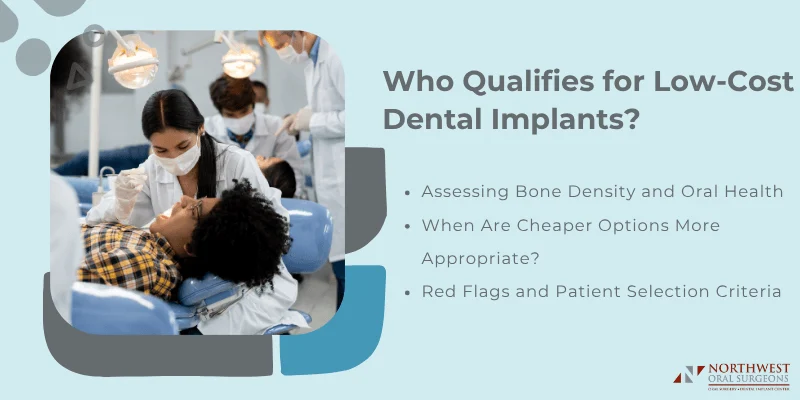
Assessing Bone Density and Oral Health
Your jawbone strength plays a major role in whether cheaper implants will work for you. If you have healthy jawbone and good oral health, both affordable and expensive implants can be viable options.
Dentists measure bone density through X-rays and CT scans before placing any implant. Patients with strong, thick jawbones can often support less expensive implant materials without issues.
However, insufficient bone density from tooth loss or gum disease may require bone grafting first.
Your gums need to be healthy and free from active infection. Periodontal disease or ongoing inflammation makes any implant more likely to fail, especially cheaper options with lower biocompatibility.
You should have good oral hygiene habits and be willing to maintain them after getting implants.
When Are Cheaper Options More Appropriate?
Younger patients with strong bones and healthy gums often do well with affordable implant options. Your financial situation matters too—if budget constraints mean choosing between no treatment and a cheaper implant, the affordable option usually wins.
Single tooth replacements in less visible areas like back molars work well with lower-cost materials. These teeth handle less force than front teeth and don’t show when you smile.
Mini dental implants cost less and work for patients with narrow spaces or those who want a less invasive procedure.
You might consider cheaper options if you need temporary tooth replacement while saving for permanent solutions. Some patients use affordable implants as a bridge solution before getting higher-quality materials later.
Red Flags and Patient Selection Criteria
You’re not a good candidate for cheap implants if you smoke regularly. Smoking reduces blood flow and healing, which already increases failure risk with any implant type.
Heavy teeth grinding or clenching puts extra stress on implants. Cheaper materials may not withstand this pressure over time. You should address these habits before getting any implant.
Poor candidates for budget implants include those with:
- Uncontrolled diabetes or autoimmune conditions
- History of radiation therapy to the head or neck
- Severe bone loss requiring extensive grafting
- Multiple missing teeth needing full-arch restoration
Patients who can’t commit to regular dental visits and proper oral hygiene should reconsider cheaper options. These implants need consistent care to prevent complications like hyperplasia or surrounding tooth injury.
Alternatives to Cheap Implants: Safe Ways to Save
You can reduce costs without compromising quality by choosing proven tooth replacement methods or finding legitimate ways to make implants more affordable. Understanding your options helps you make smart decisions about your dental care budget.
Implant-Supported Bridge vs. Dentures
An implant-supported bridge uses fewer implants than replacing each tooth individually, which cuts costs significantly. Instead of placing an implant for every missing tooth, your dentist anchors a bridge to two or four implants that support multiple replacement teeth.
This approach works well when you’re missing several teeth in a row.
Traditional dentures remain the cheapest way to replace missing teeth since they only require impressions and fitting appointments. You can get partial dentures for some missing teeth or complete dentures for a full arch.
They require daily removal and cleaning, plus periodic adjustments as your gums change shape over time.
A dental bridge attaches replacement teeth to your natural teeth on either side of the gap. These don’t require surgery and cost less than implants. However, your dentist must reshape the adjacent teeth to support the bridge, which permanently alters those healthy teeth.
Proven Affordable Options and Financing
All-on-4 treatment uses just four implants to support an entire arch of replacement teeth, making it more affordable than individual implants for each tooth. This technique costs less because it requires fewer implants and often avoids the need for bone grafting procedures.
Many dental offices offer financing options that let you pay over time rather than upfront. You can often find plans with low or zero interest if you pay within a set timeframe, typically 6 to 24 months.
Some practices work with third-party medical financing companies that specialize in dental procedures.
You might also consider dental insurance plans that cover a portion of implant costs, though you’ll usually need to wait through a coverage period before major procedures qualify.
How Dental Schools and Bundled Packages Help

Dental schools provide supervised implant procedures at reduced costs because students perform the work under experienced faculty oversight. The process takes longer than private practice appointments, but you receive quality care at a fraction of typical prices.
Bundled packages combine multiple services into one price, which usually costs less than paying for each step separately. These packages might include the implant placement, abutment, crown, and follow-up visits in a single fee.
This approach eliminates surprise costs and makes budgeting easier.
Some practices offer discounts when you get multiple implants at once or combine treatments like implants and dental bridges in the same treatment plan.
Maximizing Long-Term Success and Safety
Proper aftercare and staying current with modern implant technology can significantly improve your dental implant’s lifespan and reduce complications.
Understanding warranty coverage and maintaining excellent oral hygiene habits are essential steps you can take to protect your investment.
Importance of Thorough Aftercare and Hygiene
Your oral hygiene routine directly affects how well your dental implant performs over the years. Brushing twice daily and flossing around your implant helps prevent infection and inflammation that can lead to failure.
Regular professional cleanings are just as important as your home care routine. Your dentist or hygienist can spot early warning signs of problems before they become serious. Early identification and correction of issues helps ensure long-term survival of your implant.
Proper implant placement during the dental implant procedure sets the foundation for success. However, your daily habits determine whether that foundation stays strong.
Avoiding hard foods during healing and following your dentist’s specific aftercare instructions reduces stress on your new implant.
Warranties, Follow-ups, and Technological Advancements
Warranty coverage varies significantly between cheaper and premium implant options. Many budget implants offer limited warranties or none at all, while higher-quality systems often include 10-year guarantees or lifetime coverage on the implant itself.
Scheduled follow-up appointments help your dentist monitor your implant’s integration and function.
These visits catch potential issues early when they’re easier and less expensive to fix. CAD/CAM technology has brought revolutionary changes to implant planning and fabrication, delivering better precision and superior stability.
Modern implant technology continues to improve long-term outcomes through better materials and design. When you invest in newer implant systems, you benefit from years of research focused on reducing complications and extending implant lifespan beyond the standard expectations.
Frequently Asked Questions
Lower-cost dental implants raise specific concerns about complications, material quality, and long-term durability. Understanding these factors helps you make informed decisions about budget-friendly options while protecting your oral health.
What are the common complications with lower-cost dental implants?
Budget dental implants can lead to several complications when quality is compromised. Infection at the implant site occurs more frequently with less experienced providers or when proper sterilization protocols aren’t followed.
Implant failure happens when the titanium post doesn’t properly fuse with your jawbone. This problem is more common with cheaper materials that may not meet the same biocompatibility standards as premium options.
Nerve damage can occur during improper placement, leading to numbness or pain in your jaw, lips, or tongue. You might also experience gum recession around the implant if the procedure wasn’t done correctly.
Does the longevity of dental implants differ with price?
The lifespan of your dental implant depends on both the materials used and the skill of your dentist. Premium implants typically last 20 years or more with proper care, while some budget options may have shorter lifespans.
Mini dental implants cost less at $500 to $1,500 per implant but may not last as long as traditional ones. The quality of materials directly affects how well the implant integrates with your bone over time.
Your implant’s durability also depends on factors like your oral hygiene habits and regular dental checkups. Even affordable implants can last 10 to 20 years when placed by qualified professionals and maintained properly.
How can I tell if a budget-friendly implant is of good quality?
Look for implants made from medical-grade titanium, which is the industry standard for durability and biocompatibility. Ask your dentist about the brand and manufacturer of the implants they use.
Check if your dentist has proper credentials and experience with dental implant procedures. You should request to see before-and-after photos of previous patients and read online reviews from verified patients.
A quality implant provider will offer warranties on their work, typically covering the implant itself for several years. Be wary of deals that seem too good to be true, as extremely low prices often indicate corners being cut on materials or expertise.
What maintenance challenges might I encounter with less expensive implants?
Some lower-cost implants may require more frequent adjustments or repairs than premium options. The crown or artificial tooth attached to cheaper implants might chip or wear down faster, requiring replacement sooner.
You may need more follow-up appointments to monitor the implant’s integration with your jawbone. Budget implants with lower-quality materials can be more prone to loosening over time, requiring professional tightening.
Poor initial placement can create cleaning difficulties around the implant, increasing your risk of gum disease. You’ll need to be extra vigilant about daily brushing and flossing to prevent complications.
In what ways can my overall health impact the success of dental implants?
Your general health plays a major role in how well your body accepts and maintains dental implants. Diabetes can slow down the healing process and reduce the success rate of implant integration with your jawbone.
Smoking significantly increases your risk of implant failure by restricting blood flow to your gums and bone. If you have osteoporosis or take medications that affect bone density, your implant may struggle to fuse properly.
Autoimmune conditions can interfere with the healing process after implant surgery. You should discuss all your medical conditions and medications with your dentist before getting implants, regardless of the price point.
Are there specific materials in dental implants to be cautious of when considering cost?
Titanium is the most common and well-tested material for dental implants, with decades of proven success. Some ultra-budget implants use lower-grade titanium alloys that may not integrate as well with your bone.
Zirconia implants cost more at $2,000 to $5,000 per implant but are metal-free and hypoallergenic. Be cautious of implants made from unknown materials or those without proper FDA approval.
The crown material also matters for long-term success and appearance. Cheaper crowns made from low-grade ceramics or plastics may stain, crack, or wear down faster than higher-quality porcelain options.