

What Is an Impacted Tooth?
An impacted tooth simply means that it is “stuck” and cannot erupt into function. While patients frequently develop problems with impacted third molar (wisdom) teeth, which are usually extracted, the maxillary cuspid (upper canine or eyetooth) is the second most common tooth to become impacted and requires a different approach.
Your cuspid tooth is a critical tooth that plays an important role in your bite. The cuspid teeth are very strong biting teeth with the longest roots of any human teeth. They are designed to be the first teeth that touch when your jaws close together, guiding the rest of your teeth into the proper bite.
Understanding Cuspid Impaction
Normally, the maxillary cuspid teeth are the last of your “front” teeth to erupt into place. They usually come into place around age 13 and cause any space left between your upper front teeth to close tighter together. If a cuspid tooth gets impacted, every effort is made to get it to erupt into its proper position.
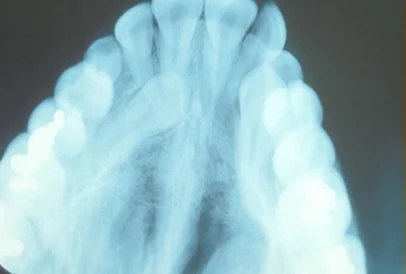
The techniques to aid eruption can be applied to any impacted tooth in your upper or lower jaw, but most commonly they are applied to the maxillary cuspid (upper eye) teeth. Sixty percent of these impacted eyeteeth are located on the palatal (roof of the mouth) side of your dental arch. The remaining impacted eye teeth are found in the middle of the supporting bone, stuck in an elevated position above the roots of adjacent teeth, or are out to the facial side of the dental arch.
Early Recognition Is Key to Your Success
The older you are, the more likely an impacted eyetooth will not erupt by natural forces alone, even if space is available for the tooth to fit in your dental arch. A panoramic x-ray, along with a dental examination, will help determine whether all your adult teeth are present or if some adult teeth are missing.
Success Rates by Age:
- 11-12 years old: With space opened for eruption, you have a good chance for success
- 13-14 years old: The impacted eyetooth will not erupt by itself, even with space cleared for its eruption
- Over 40 years old: Much higher chance that the tooth will be fused in position. Your only option is to extract the impacted tooth and replace it with a crown on a dental implant or a fixed bridge
Your Treatment Path
Treatment may require referral to an oral surgeon for extraction of over-retained baby teeth and/or selected adult teeth that are blocking the eruption of your all-important eyeteeth. The oral surgeon will also need to remove any extra teeth (supernumerary teeth) or growths that are blocking the eruption of any adult teeth.
When Your Eyetooth Won’t Erupt Naturally
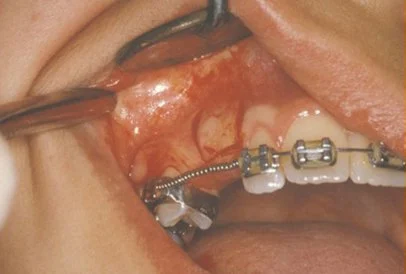
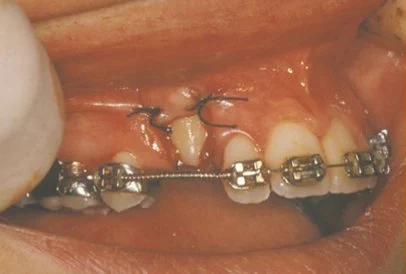
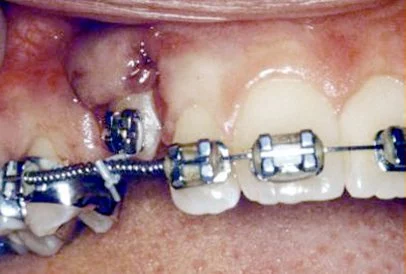
In cases where your eyeteeth will not erupt spontaneously, the orthodontist and oral surgeon will work together to get these teeth to erupt. Each case must be evaluated on an individual basis, but treatment will usually involve a combined effort between the orthodontist and the oral surgeon. The oral surgeon will expose and bracket your impacted eyetooth.
The goal is to erupt your impacted tooth, not extract it. Once the tooth has moved into its final position, the gum around it will be evaluated. In some circumstances, you may need minor gum surgery for optimal results.
Exposure and Bracketing Procedure
What to Expect from Your Surgery
The surgery to expose and bracket an impacted tooth is a very straightforward surgical procedure performed in the oral surgeon’s office. For most patients, it is performed using IV sedation and local anesthesia for maximum comfort. In selected cases, it will be performed under local anesthesia only if you believe you can remain very still with the noises and pressure feelings of surgery.
If your procedure only requires exposing the tooth with no bracketing, the time required will be shortened. These details will be discussed thoroughly at your preoperative consultation with your doctor.


The Team Approach to Your Care
At Northwest Oral Surgeons in Schererville, IN, Drs. Wolf, Mekhail and Moll work closely with orthodontists to ensure your impacted teeth are successfully brought into proper position. Our coordinated approach means:
- Precise surgical exposure of your impacted tooth
- Careful bracket placement for orthodontic guidance
- Ongoing monitoring of your progress
- Minimal discomfort throughout treatment
Take Action for Your Impacted Teeth
Don’t let an impacted tooth compromise your bite or oral health. The sooner you address impacted teeth, especially in younger patients, the better your chances for successful eruption and proper alignment.