


Two people can walk into the same dental office for implants and walk out with bills that differ by thousands of dollars. This pricing gap often surprises patients who assume implant costs follow a standard formula.
The price you pay for a dental implant depends on your unique clinical needs, the materials and technology your provider uses, your location, and the complexity of your case.
Your jawbone density, whether you need grafting or extractions, and the type of crown you choose all play major roles in the final number.
Several factors determine implant treatment prices, from surgeon experience to regional overhead costs. Urban practices typically charge 10-25% more than rural clinics for the same procedure.
Understanding what drives these differences helps you ask better questions during consultations and spot opportunities to save without sacrificing quality. Some cost drivers are within your control, while others reflect the reality of your dental health and where you live.
Key Takeaways
- Implant costs vary between patients based on bone density, grafting needs, crown materials, and procedure complexity
- Your geographic location and choice of provider significantly impact pricing due to facility costs and surgeon expertise
- Comparing itemized quotes from multiple providers and exploring financing options can reduce your out-of-pocket expenses
Core Components That Influence Implant Pricing
Each dental implant restoration involves multiple separate parts and services that add up to your total bill. The physical hardware, laboratory work, and diagnostic steps each carry their own costs and can vary widely between practices.
Breakdown of Dental Implant Parts
Your dental implant consists of three main pieces that work together to replace a missing tooth. The implant fixture is the titanium or zirconia screw that goes into your jawbone and acts as an artificial root.
The abutment connects the fixture to the visible tooth and sits between the two components. The crown is the tooth-colored cap that shows when you smile and does the actual chewing.
Different materials affect the final price you pay for each piece. Titanium implants typically cost less than zirconia options, though both are durable. Custom abutments run between $300 and $800, while stock versions cost less but may not fit as precisely.
Your crown material matters too—porcelain and monolithic zirconia crowns fall at the higher end of the $800 to $2,500 range but offer better aesthetics and strength.
Role of Lab Fees and Prosthetic Fabrication
Laboratory fees make up a significant portion of your implant cost because skilled technicians custom-build your crown or bridge off-site. Prosthetic fabrication involves detailed work to match your natural tooth color, shape, and bite alignment.
Digital impressions have replaced messy putty molds at many practices, creating precise 3D models that labs use to mill your restoration.
Higher-quality labs charge more but typically deliver better-fitting and longer-lasting prosthetics. Some practices use in-house milling equipment to reduce turnaround time and laboratory fees, though the equipment investment may be reflected in other fees.
When comparing estimates, ask whether lab fees are included or billed separately so you understand the complete cost.
Diagnostic Imaging and Consultation Costs
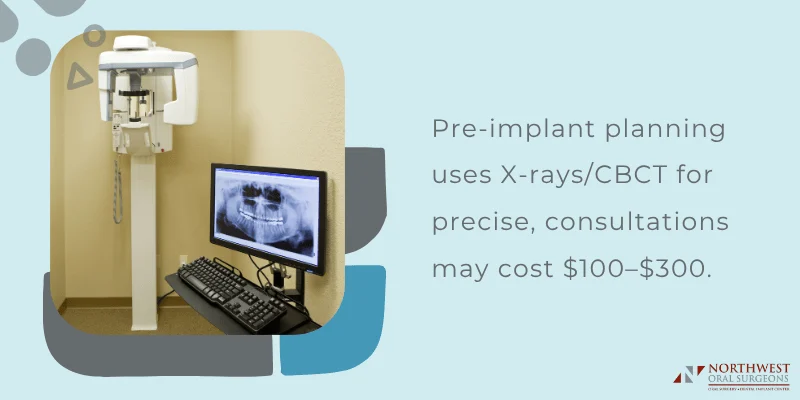
Before placing your implant, your dentist needs detailed images of your jaw structure to plan the procedure safely. X-rays provide basic bone measurements, while CBCT scans create 3D maps that show nerve locations and bone density.
These scans typically add several hundred dollars to your treatment but reduce surgical complications.
Your initial consultation should include an examination, treatment planning, and discussion of your options. Some practices include this visit in the overall package, while others charge $100 to $300 separately.
Request an itemized estimate that lists diagnostics, imaging, each implant component, and surgical fees so you can compare offers accurately between providers.
Patient-Specific Clinical Factors Impacting Price
Your individual dental situation plays a major role in determining how much you’ll pay for implants. The quality of your jawbone, whether you need preliminary procedures, and how many visits your case requires all affect the final cost.
Bone Quality and the Need for Grafting
Your jawbone needs to be strong enough to support an implant. If you’ve been missing a tooth for a while, the bone in that area may have deteriorated.
When your bone isn’t thick or dense enough, you’ll need a bone graft before getting your implant. This adds both time and cost to your treatment.
A bone graft involves adding bone material to strengthen your jaw. The material might come from your own body, a donor, or a synthetic source. Each option has different pricing.
You’ll typically wait several months after bone grafting before your dentist can place the implant. This healing period is necessary for the graft to integrate with your existing bone.
Sinus Lifts and Extractions
If you need an implant in your upper jaw, you might require a sinus lift. This procedure raises the sinus floor to create enough space for the implant without interfering with your sinus cavity.
Sinus lifts add significant cost because they’re more complex than standard implant placement. The procedure requires specialized skills and adds months to your treatment timeline.
You’ll also pay extra if your damaged tooth hasn’t been removed yet. Extractions must happen before implant placement, and difficult removals cost more than simple ones. Teeth with curved roots or infections require more work to extract safely.
Treatment Plan Complexity and Timelines
Your treatment plan complexity directly impacts what you’ll pay. A single tooth replacement in healthy bone costs much less than multiple implants requiring preparatory work.
Some patients can get immediate placement where the implant goes in right after extraction. Others need staged treatment with months of healing between each step.
The number of appointments in your treatment plan affects total cost. More visits mean more time in the chair and more procedures to complete. Your dentist will map out these timelines during your consultation based on your specific needs.
Aftercare and Follow-Up Visits
Your treatment doesn’t end when the implant is placed. You’ll need several follow-up visits to monitor healing and place temporary restorations while your implant integrates.
Most practices include a certain number of aftercare appointments in their initial quote. Additional visits beyond the standard protocol may carry extra fees.
Dental check-ups during the healing phase let your dentist catch any problems early. You might need adjustments to temporary restorations or treatment for inflammation around the implant site. These interventions protect your investment but can add to your overall expense.
Choice of Materials and Technology
The materials in your implant and the technology your dentist uses can change both the price you pay and how well your implant works.
Premium materials like zirconia cost more than standard titanium, and advanced technologies such as guided surgery add fees but improve accuracy.
Titanium Implants vs. Zirconia Implants
Titanium posts remain the most common choice for dental implants because they integrate well with bone and have a long track record of success. They cost less than zirconia options in most cases.
Zirconia implants appeal to patients who want a metal-free solution. They offer a white color that can look more natural in certain cases. However, zirconia posts often carry higher material and lab costs compared to titanium.
Your dentist may recommend titanium for strength and proven results. Zirconia might be better if you have metal sensitivities or want improved front-tooth appearance. Both materials work well when placed correctly, but the price difference can affect your total bill.
Crown Material Options
The crown sits on top of your implant and shows when you smile. You can choose from several materials, each with different costs and benefits.
Porcelain-fused-to-metal crowns cost less but have a metal base that can show through in certain lighting. Full ceramic or zirconia crowns look more natural and let light pass through like real teeth. These premium materials require more lab time and custom shading work, which raises the price.
Crown materials influence both upfront cost and long-term durability. Higher-quality crowns may cost more now but can last longer and need fewer replacements. Ask your dentist to explain how each material choice affects your specific case and budget.
Advanced Surgical Technologies
Modern dental practices invest in technology that improves how they plan and place implants. 3D imaging systems like CBCT scans let your dentist see your bone structure in detail before surgery.
Advanced technology such as CBCT scans and guided implant placement affects both price and results. These tools increase accuracy and can reduce healing time. However, clinics must pay for this equipment, and those costs appear in your treatment estimate.
Digital impressions replace messy molds with a scanning wand. This technology speeds up the process and improves fit. Some offices also use intraoral cameras to show you exactly what needs treatment.
Guided Surgery and CAD/CAM
Guided surgery uses computer planning and custom surgical guides to place implants in exact positions. Your dentist creates a digital plan before your procedure, which improves precision.
CAD/CAM technology allows labs to design and mill custom abutments and crowns using computer software and milling machines. This process produces parts that fit better than stock components. Premium brands like Straumann offer complete digital workflows that connect planning, surgery, and restoration.
These technologies add fees to your estimate because they require specialized equipment and training. The benefit is more predictable results and often shorter treatment times. Your dentist can explain whether guided surgery makes sense for your case or if traditional methods will work just as well.
Influence of Provider, Location, and Market
Where you get your dental implant and who performs it plays a major role in what you’ll pay. The dentist’s background, local business costs, and regional pricing patterns all shape your final bill.
Provider Credentials and Experience
The type of provider you choose directly affects your implant cost. Specialists who perform implant surgery charge a median of $3,400, while general dentists charge around $4,800 for the same procedure.
This price difference exists because specialists often handle more cases and work with established systems. Oral surgeons and periodontists focus on implant procedures daily, which lets them work more efficiently.
Provider credentials matter beyond just the surgery. A dentist with advanced training in implant dentistry may offer better outcomes. You should ask about how many implants your provider places each year and their success rates.
Clinic Overhead and Market Rates
Your dentist’s overhead costs get built into your implant price. Rent, staff salaries, equipment, and technology investments all affect what clinics charge.
Urban practices face higher rent and labor costs than rural offices. A clinic in a major city center pays more for the same space than one in a smaller town. These expenses get passed to patients.
The technology your clinic uses also impacts pricing. Practices with 3D imaging, digital planning software, and advanced surgical guides invest heavily in equipment. While this technology can improve your results, it increases the clinic’s costs.
Insurance reimbursement rates in your area influence what dentists charge. Markets with higher insurance payments often see higher cash prices too.
Regional Price Variations
Where you live significantly changes dental implant costs. A 2025 survey of 278 dental practices found major differences across six U.S. cities.
Minneapolis had the highest median cost at $5,505 for a complete single implant. Houston showed the lowest at $3,665. Chicago came in at $4,500, while Philadelphia and Denver were similar at $3,900 and $3,833.
Cost of living drives much of this variation. Cities with expensive housing and high wages see higher dental costs. The number of dentists in your area matters too. More competition can lower prices.
Some patients consider traveling to lower-cost regions for treatment. But remember you’ll need follow-up visits, so factor in travel costs and time.
Comparing Quotes and Transparent Pricing
Getting multiple quotes helps you understand fair pricing in your area. Call at least three to five offices and ask for detailed breakdowns.
Your quote should list three separate costs:
- Implant fixture (the part placed in your jaw)
- Abutment (connector piece)
- Crown (the visible tooth)
Some offices give you one total price while others break it down. The nationwide median for all three components together is $4,000. If you see prices much higher, ask why.
Watch for hidden fees. Some practices charge separately for consultations, X-rays, CT scans, or surgical guides. Others include these in their quoted price.
Ask each office to explain what’s included. Does the price cover follow-up visits? What about adjustments if something doesn’t fit right? Transparent pricing helps you make informed decisions about your care.
Patient reviews can reveal how honest a practice is about costs. Look for comments about surprise charges or billing issues before you commit.
Financial Considerations and Payment Strategies
Most dental insurance plans offer limited coverage for implants, so you’ll likely face significant out-of-pocket costs that require careful planning through financing options, payment plans, or health savings accounts.
Understanding what your insurance will cover, which fees might appear unexpectedly, and what warranties protect your investment helps you budget accurately and avoid financial surprises.
Insurance Coverage and Limitations
Dental insurance rarely covers implants unless they’re deemed medically necessary. Most plans classify implants as cosmetic procedures, which means you’ll receive little to no reimbursement even if you have dental coverage.
When insurance does contribute, it typically covers only a portion of the surgical fee or the crown component. You might see coverage of $1,000 to $2,000 maximum per year, which barely dents the total dental implant cost of $3,000 to $6,000 per tooth.
Some medical insurance policies will cover implants if tooth loss resulted from an accident or medical condition. You should contact both your dental and medical insurance providers before treatment to understand exactly what they’ll pay and what documentation they require.
Out-of-Pocket Costs and Financing Options
Your out-of-pocket costs will include the implant post, abutment, crown, and any preparatory procedures like bone grafts. Financial planning requires understanding multiple payment methods that can make treatment more accessible to your budget.
Common financing options include:
- CareCredit and medical credit cards with promotional 0% interest periods of 6-24 months
- In-house payment plans offered directly by dental practices
- Health Savings Accounts (HSA) or Flexible Spending Accounts (FSA) that use pre-tax dollars
- Personal loans from banks or credit unions with fixed monthly payments
Many practices offer interest-free financing for 12 months or longer if you qualify. This lets you spread the cost of dental implants over manageable monthly payments instead of paying everything upfront.
Hidden Fees and Warranties
The price of dental implants often excludes diagnostic imaging, temporary crowns, and follow-up adjustments. These hidden fees can add $500 to $2,000 to your final bill, so always request an itemized estimate that breaks down every component.
Ask your dentist about warranties on both the implant and the crown. Some manufacturers offer lifetime warranties on the implant post itself, while crowns typically carry 5-10 year warranties against defects.
Be sure to clarify which follow-up visits are included in your quoted price. Some practices bundle post-operative care into the surgical fee, while others charge separately for each adjustment or complication visit.
Long-Term Value and Patient Outcomes
Full-arch restorations and implant-supported options deliver different value profiles based on how many teeth you’re replacing, while consistent oral hygiene and follow-up visits protect your investment and extend implant lifespan.

Full Mouth and Implant-Supported Options
Full mouth dental implants replace an entire arch of missing teeth using four to six strategically placed posts that support a fixed prosthesis.
This approach costs more upfront than traditional dentures, but long-term cost-effectiveness of dental implants often makes them a better value because they don’t need relining, rebasing, or frequent replacements.
Implant-supported dentures combine the affordability of removable dentures with the stability of implants. They snap onto two to four implants per arch and cost less than full-arch restoration while eliminating denture movement during eating or speaking.
Full-arch restoration options like All-on-4 provide a permanently fixed solution that feels and functions more like natural teeth, which improves your ability to eat a wider variety of foods and reduces bone loss over time.
Your choice between these options should reflect your budget, bone density, and lifestyle needs. Patients who value convenience and maximum stability often find that the higher initial cost of full-arch solutions pays off through reduced maintenance and better oral health outcomes.
Maintenance, Oral Hygiene, and Follow-Up Care
Oral hygiene around implants requires daily brushing, flossing with special threaders or water flossers, and antimicrobial rinses to prevent peri-implantitis—an infection that can cause implant failure.
You need to clean around abutments and under implant-supported prosthetics just as carefully as you would natural teeth. Poor hygiene leads to inflammation and bone loss that jeopardize long-term implant survival.
Follow-up care includes professional cleanings every three to six months and periodic X-rays to monitor bone levels and implant stability. Your dentist will check for loose components, worn prosthetics, and soft-tissue health during these visits.
Skipping appointments increases your risk of complications that require expensive repairs or even implant removal.
Most clinics build follow-up protocols into treatment plans, so ask about included visits and long-term maintenance costs when comparing quotes. Consistent care protects your investment and helps your implants last 20 years or more.
Frequently Asked Questions
Patients often pay different amounts for dental implants based on their unique oral health needs, the materials chosen, and where they receive treatment. Insurance coverage and extra procedures can add thousands of dollars to the final bill.
What factors contribute to the variability in dental implant costs for different individuals?
Your dental implant cost depends on several personal factors that are unique to your situation. The number of implants you need directly affects the total price, as does the current condition of your jawbone and gums.
Your dentist’s experience level plays a big role in pricing. A highly skilled surgeon with years of implant experience typically charges more than a general dentist who performs fewer implant procedures.
The geographic location of your dental practice matters too. Clinics in major cities or areas with higher costs of living usually charge more than practices in smaller towns or rural areas.
How does the complexity of a patient’s case affect the price of dental implants?
Simple cases where you have healthy gums and sufficient bone density cost less than complicated situations. If you’ve had missing teeth for a long time, your jawbone may have deteriorated and need rebuilding before implant placement.
Complex procedures require more time and advanced surgical techniques from your dentist. Patients with gum disease, diabetes, or other health conditions often need extra appointments and specialized care.
Multiple missing teeth in different areas of your mouth increase complexity. Your dentist must plan precise angles and positions for each implant to ensure proper function and appearance.
Can the type of material used for dental implants influence the overall cost for patients?
The material you choose for your implant significantly impacts your final cost. Titanium implants might be pricier but offer proven durability and biocompatibility with your bone tissue.
Zirconia implants appeal to patients who want metal-free options and natural-looking results. These ceramic implants typically cost more than standard titanium versions.
The crown material also affects your price. Zirconia crowns are often priced higher than PFM (Porcelain Fused to Metal) but look more like natural teeth and last longer.
Why might the cost of dental implants vary from one dental clinic to another?
Dental clinics set their own prices because implants are not covered by standard insurance pricing regulations. Each practice calculates costs based on their overhead expenses, staff salaries, and equipment investments.
Some clinics advertise low prices to attract patients but may use lower-quality materials or add hidden fees later. Others charge more because they offer extended warranty periods and comprehensive aftercare programs.
The implant brands available at each clinic also drive price differences. Premium international brands like Straumann command higher prices than domestic options like Osstem or Dentium.
Does dental insurance coverage play a role in the differing costs of implants for patients?
Your out-of-pocket costs vary widely based on what your insurance plan covers. Most dental insurance treats implants as cosmetic procedures and provides little to no coverage.
Some plans cover part of the crown portion or related procedures like extractions. If you have medical insurance, it might help pay for implants needed due to accident or injury.
Patients with no insurance coverage pay the full amount, while those with partial benefits might only pay 50-70% of the total cost. Your coverage directly determines how much you’ll spend on your treatment.
How do additional procedures, like bone grafting, impact the total price of getting dental implants?
Bone grafting adds substantial costs to your implant treatment because it requires separate surgery performed before implant placement. This procedure rebuilds lost bone tissue so your jaw can support the implant properly.
Sinus lifts are another common add-on for upper back teeth replacements. These specialized procedures can add $1,500 to $3,000 or more to your total treatment cost.
You might also need tooth extractions, gum treatments, or temporary teeth while your implants heal. Each additional procedure comes with its own fees for materials, surgical time, and follow-up appointments.