

You need implants that last and look natural. Bone loss and implant stability both matter, but they do not matter the same way.
Long-term success depends most on healthy bone around the implant plus proper surgical techniqueand predictable stability at placement.
If you worry about losing bone or having a loose implant, this article will show what factors truly change outcomes, what you can control, and what your clinician monitors over time. Expect clear, evidence-based steps you can use to protect bone and keep implants stable.
Key Takeaways
- Healthy bone around an implant is the main driver of lasting success.
- Proper placement and early stability strongly affect long-term outcomes.
- Ongoing care and monitoring help prevent progressive bone loss and failure.
Concerned about bone loss or a loose implant? Schedule an implant stability evaluation in Munster or Schererville, IN.
Understanding Implant Success and Long-Term Outcomes
You need clear measures to know if an implant will last and how bone changes affect it. This section explains how clinicians judge success, why marginal bone loss matters, and which clinical and x-ray checks they use.
Criteria for Implant Success, Survival, and Failure
Clinicians use specific signs to label an implant as successful, surviving, or failed. Success often means the implant is stable, pain-free, shows no infection, and has minimal bone loss over time.
Survival simply means the implant remains in the mouth and supports a restoration, even with some complications. Failure means the implant becomes mobile, causes persistent pain, or must be removed because of ongoing infection or progressive bone loss.
You should expect written thresholds in studies and guides: acceptable marginal bone loss in the first year is often ≤1–1.5 mm and ≤0.2 mm per year after that, though values vary by protocol.
Functional criteria include firm osseointegration, no progressive radiographic bone loss, and restored chewing function. Patient factors (oral hygiene, smoking, systemic disease) affect whether your implant meets these criteria.
Role of Marginal Bone Loss in Long-Term Prognosis
Marginal bone loss (MBL) is a key predictor of long-term implant outcomes. Early bone loss after placement signals higher risk for future problems. Small, stable bone changes do not always mean failure, but progressive or accelerating bone loss raises concern for peri-implantitis and compromised survival.
You should watch both the amount and the pattern of bone loss. Vertical loss around the neck of the implant, widening of the peri-implant space, or bone defects on x-rays suggest active disease. Studies link higher insertion torque and poor bone density to greater MBL, so surgical placement and bone quality matter to your long-term prognosis.
Bone grafts and guided bone regeneration aim to restore volume and improve survival when natural bone is lacking; their success influences future MBL.
Clinical and Radiographic Outcome Measurements
Clinicians combine clinical exams and radiographs to judge outcomes. Clinically, they check implant mobility, probing depth, bleeding on probing, suppuration, and patient symptoms like pain or altered function. A stable, symptom-free implant with healthy soft tissue usually signals satisfactory survival.
Radiographic evaluation uses periapical or CBCT images to measure marginal bone levels over time. Practitioners compare baseline images (post-op) with follow-ups at 3, 6, 12 months and annually afterwards.
Key radiographic signs include crestal bone height, bone-to-implant contact, and any radiolucent zones. You can use a simple checklist to track outcomes:
- Baseline image taken immediately after restoration.
- Follow-up intervals: 3, 6, 12 months, then yearly.
- Record vertical bone change in mm and note pattern (horizontal vs. vertical). Accurate, consistent imaging plus clinical records give the best view of your implant’s long-term success and survival.
Bone Loss: Causes, Assessment, and Impact
Bone around an implant changes for clear reasons and shows predictable signs you can track. You will read how marginal bone loss appears, what causes it, and the simple tests clinicians use to measure it.
Marginal Bone Loss and Peri-Implant Bone Changes
Marginal bone loss means the crestal bone next to the implant shrinks. You will often see the first changes within the first year after loading, then slower loss over time. Loss shows as reduced crestal bone level on radiographs or a deeper probing depth at the implant neck.
Peri-implant bone loss can be horizontal or vertical. Horizontal loss lowers bone height around multiple surfaces. Vertical defects form deeper, localized pockets that may need grafting. Bone remodeling after surgery is normal; longer-term resorption with inflammation or overload is not.
Watch bleeding on probing, increases in pocket depth, and rising plaque index as early clinical signs that match radiographic bone changes.
Etiologies: Peri-Implantitis, Mechanical Stress, and Host Factors
Peri-implantitis is infection-driven bone loss with bleeding on probing, suppuration, and progressive radiographic bone loss. It follows untreated peri-implant mucositis (inflammation without bone loss). Poor oral hygiene, residual cement, and bacterial biofilm drive mucositis into peri-implantitis.
Mechanical stress also causes crestal bone loss. Overloading, malocclusion, and cantilevers increase microstrain at the bone–implant interface and may lead to marginal bone resorption even without infection.
Implant design matters: two-piece connections with microgaps can allow bacterial leakage and more crestal bone loss than well-sealed connections.
Host factors change your risk. A history of periodontal disease, smoking, uncontrolled diabetes, low bone density, and thin mucosa raise the chance of peri-implant bone loss.
Systemic bone quality affects osseointegration and long-term stability, so clinicians assess bone density before placement and consider bone augmentation when needed.
Measuring Bone Loss: Techniques and Standards
Radiographs remain the main tool to measure radiographic bone loss. Periapical radiographs with paralleling technique give consistent crestal bone level readings. Cone-beam CT can show three-dimensional peri-implant bone defects but is used selectively because of radiation and cost.
Clinical measures include probing depth and bleeding on probing. Probing depth >5 mm with bleeding or suppuration suggests peri-implantitis when paired with radiographic bone loss. Use a calibrated periodontal probe and record baseline crestal bone level at placement or loading to compare later.
Common reporting metrics: marginal bone loss in millimeters from a fixed reference (implant shoulder or implant–abutment junction), changes in crestal bone level, and bone fill for defects. Track these at regular intervals (baseline, 6–12 months, then yearly) to spot trends early and protect implant stability.
For more on implant-level differences and marginal bone outcomes, see research comparing bone-level and tissue-level implants.
Implant Stability: Fundamentals and Predictors
Implant stability depends on how well the implant locks in the bone at placement and how well bone grows onto the implant surface afterward. You will learn what gives immediate hold, what builds long-term fixation, and how clinicians measure both.

Primary and Secondary Stability Explained
Primary stability is the mechanical fit of the implant in the bone right after placement. It comes from tight contact between implant threads and surrounding bone. High primary stability lowers early implant mobility and reduces the risk of early failure.
Secondary stability develops as bone cells attach to and remodel around the implant; a process called osseointegration. It usually rises over weeks to months as new bone forms on the implant surface. If bone density is low, secondary stability may take longer or be weaker.
You should note primary and secondary stability overlap. Primary stability dominates at surgery, then falls slightly during early healing as remodeling starts. Secondary stability then increases and becomes the main factor for long-term success. Implant design, surface roughness, and your bone quality affect both stages.
Factors Influencing Implant Stability
Bone density and bone quality strongly affect both primary and secondary stability. Dense cortical bone gives high insertion torque and better initial ISQ readings, while soft trabecular bone yields lower values. Use scans and clinical probing to judge local bone before placement.
Implant diameter and length matter. A wider implant boosts contact area and insertion torque; a longer implant gains more bone support in height.
Thread design and surface treatments increase friction and speed osseointegration. Surgical technique (under- or over-preparing the osteotomy) directly changes insertion torque and immediate stability.
Patient factors such as smoking, uncontrolled diabetes, and medication use can slow bone healing and weaken secondary stability. Loading protocol also affects outcome: immediate loading needs higher primary stability than delayed loading. Your clinician weighs all these factors when planning implant placement.
Stability Measurement: IT, ISQ, and RFA
Insertion torque (IT) measures rotational resistance during placement, reported in N·cm from the torque wrench. IT gives a direct, simple read on primary stability. Very high IT can signal excessive compression; very low IT warns of poor fixation.
Implant stability quotient (ISQ) comes from resonance frequency analysis (RFA). RFA sends a small vibration through a transducer on the implant and records frequency. ISQ scores range about 40–90; higher ISQ means greater stability. ISQ tracks changes over time, so clinicians use it to judge when to load the implant.
Both IT and ISQ have limits. IT reflects only insertion mechanics and can’t show bone remodeling. ISQ is non‑destructive and repeats easily but can vary with transducer position and implant geometry. Using both measures together gives a clearer picture of implant mobility and readiness for loading.
For more on how bone quality and bone loss affect stability, see this study on peri-implant bone and stability.
Interactions Between Bone Loss and Implant Stability
Bone loss reduces the amount of bone that holds the implant and changes how forces travel through the implant and surrounding bone. You need stable bone volume and good bone quality to keep osseointegration strong and to prevent stress points that speed marginal bone loss.
How Bone Quality and Volume Affect Stability
Your implant’s stability depends on the density and volume of bone at the implant site. Dense cortical bone gives high primary stability and higher insertion torque, while low-density cancellous bone produces lower insertion torque and lower initial ISQ values.
Poor bone density increases micromovement risk during healing, which undermines osseointegration and raises the chance of early failure.
Bone volume controls how much surface area contacts the implant fixture. Less bone height or width concentrates load on smaller areas, increasing stress concentration and localized remodeling.
Radiographic marginal bone loss (MBL) reduces crestal support and shifts load deeper, which lowers secondary stability over time.
Key practical points:
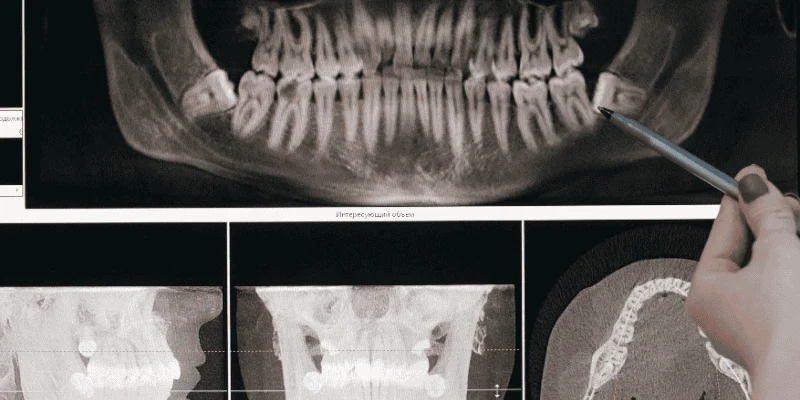
- Check bone density on CBCT before planning.
- Consider longer or wider implants to increase contact area when volume is limited.
- Use bone grafting to restore volume and improve long-term stability.
The Vicious Cycle: Bone Loss Leading to Instability
Once marginal bone loss begins, the mechanical environment at the implant changes. Loss of crestal bone raises bending moments on the implant neck, which increases stress concentration at remaining bone. That stress accelerates bone remodeling and can cause more MBL.
You should watch for early MBL signs; probing changes, radiographic crestal bone drop, or a falling ISQ. These signs often precede clinical mobility. If instability follows MBL, micromotions rise and osseointegration weakens, creating a feedback loop where bone loss and implant instability feed each other.
Interventions that break the loop:
- Reduce occlusal overload quickly.
- Improve soft-tissue seal to limit bacterial invasion.
- Consider platform-switching or altered abutment designs shown to help crestal bone preservation in many studies (see evidence on marginal bone stability).
Managing Stress and Occlusal Forces
You control many load factors that affect bone remodeling around implants. Occlusal load direction matters: off-axis forces produce higher stress concentration than axial loads. Design the prosthesis to shorten cantilevers and reduce crown height to lower bending moments on the implant fixture.
Use these steps to manage forces:
- Adjust occlusion to distribute load evenly across implants and natural teeth.
- Use splinting for multiple implants in high-load zones.
- Select implant diameter and position to minimize stress according to bone quality.
Finite element analysis and clinical studies show that wider implants and platform-switching often lower crestal stress and help reduce MBL. Monitor ISQ and clinical signs after loading so you can modify the prosthetic scheme early if excessive stress threatens stability.
Strategies to Optimize Bone Health and Implant Stability
You need clear steps that protect bone and make implants stable long term. Focus on proper grafting and materials, precise surgical and prosthetic choices, and ongoing maintenance tied to your health and hygiene.
Bone Augmentation, Grafting, and Biomaterials
If you lack bone volume, consider ridge augmentation or a sinus lift to gain height or width. Use guided bone regeneration (GBR) with a barrier membrane to keep graft material in place and encourage new bone growth.
Choose graft types based on the defect: autograft for best biologic potential, bovine xenograft for long-term volume stability, or allograft when harvesting is not feasible.
Match the biomaterial to your goal. For fast remodeling use grafts that resorb quicker. For volume maintenance use slower-resorbing xenografts. Combine particulate grafts with a cortical block when large defects exist.
Maintain tension-free soft tissue closure and adequate soft tissue thickness to protect the graft and reduce exposure risk. Plan implant length and diameter after graft healing, not before, so you place implants in the augmented, stable bone.
Surgical and Prosthetic Protocols for Improved Outcomes
Use precise osteotomy technique to preserve bone. Consider osseodensification or careful underpreparation in low-density bone to increase primary stability. Avoid excessive heat by using irrigation and controlled drilling speed; this reduces crestal bone loss risk linked to thermal damage.
Choose implant features that support crestal bone: platform switching, a stable implant neck design, and appropriate thread profile. Match implant length and diameter to bone available; longer or wider implants increase surface area for osseointegration when anatomy allows.
For full-arch rehabilitation, stage grafting and implant placement to control load. Use prosthetic designs that allow cleanability; access for hygiene reduces peri-implantitis risk. Minimize micromovement during healing with temporary restorations that fit passively.
Long-Term Maintenance and Risk Factor Management
You must keep clinical parameters under regular review. Track probing depths, bleeding on probing, and radiographic marginal bone levels at scheduled intervals. A maintenance plan should include professional cleaning every 3–6 months for high-risk patients and oral hygiene coaching for all patients.
Control systemic and local risks: treat active periodontitis before implants, manage diabetes, stop smoking, and ensure adequate nutrition and bone health. Monitor soft tissue thickness and, if thin, consider soft-tissue grafting to improve seal and reduce crestal remodeling.
Document implant design, graft materials, and surgical protocol in the chart so future care targets those specific factors.
Want implants that last? Get a stability-focused treatment plan and maintenance strategy today.
Evidence-Based Insights and Future Perspectives
You will learn which high-quality studies shape current practice and which new tools may change how you judge implant stability and bone loss. Focus stays on measurable outcomes and study designs that matter for long-term success.
Systematic Reviews and Meta-Analyses on Implant Outcomes
Several systematic reviews and meta-analyses summarize implant survival, marginal bone loss (MBL), and esthetic results over long-term follow-up. Look for papers that follow PRISMA methods and include randomized controlled trials (RCTs) and well‑reported retrospective studies.
These reviews often compare implants placed in augmented versus pristine bone and report pooled MBL values and implant survival rates.
Key clinical measures appear repeatedly: periapical radiographs for MBL, Pink Esthetic Score (PES) for esthetics, and probing indices like GI/PI for soft-tissue health.
Many meta-analyses show small mean differences in MBL between techniques but highlight heterogeneity in study methods and follow-up length. You should weigh results by study quality, sample size, and whether outcomes include functional survival or esthetic scores.
Latest Research and Technological Advances
Recent research links bone quality, insertion torque, and implant design to primary and secondary stability. New studies use ISQ measurements, finite element analysis, and high-resolution radiographs to map stress and early bone remodeling. Look for trials reporting objective stability metrics alongside clinical outcomes.
Technology also improves assessment: digital periapical imaging, standardized PES scoring, and longer RCT follow-ups give clearer esthetic and biological outcomes. Emerging areas include bone graft substitutes, guided bone regeneration protocols, and materials tested in both RCTs and retrospective cohorts.
When you read new reports, check that they report follow-up duration, radiographic MBL methods, and validated esthetic measures like PES so you can judge their relevance to your patients.
Frequently Asked Questions
You will find clear answers about what affects implant stability, how to improve bone support, and how to spot problems early. Each question gives specific steps you can take and tests your dentist may use.
What factors influence the stability of a dental implant over time?
Primary factors include bone density at the implant site, the insertion torque used during placement, and implant diameter and design.
Surgical technique and how well the implant integrates with your bone also matter.
Systemic health affects stability too. Conditions like uncontrolled diabetes, smoking, and osteoporosis can reduce bone healing and increase risk of failure.
Can bone density be improved to support implant success?
Yes. Your dentist can use bone grafting to add volume and density before or during implant placement.
Different graft materials and membranes help rebuild bone where needed.
You can also work on medical factors that affect bone. Treating vitamin D deficiency, controlling chronic diseases, and quitting smoking improve bone healing.
How does bone loss affect the longevity of dental implants?
Bone loss reduces the support around the implant and can lead to increased mobility and loss of function.
Small, slow bone changes may be manageable, but progressive loss raises the risk of implant failure.
Marginal bone loss is often measured on X-rays to track changes over months and years. Early detection lets your dentist intervene before major damage.
What are the best practices for ensuring long-term success with implants?
Maintain daily oral hygiene and attend regular dental cleanings. Professional checks let your dentist measure bone levels and make adjustments early.
Follow medical advice on controlling chronic conditions and avoid tobacco. Use a night guard if you clench or grind to protect implants from extra force.
How often should bone health be assessed after receiving a dental implant?
Radiographic checks are commonly done at baseline, 3–6 months, 12 months, and then annually for several years. Your dentist may schedule more frequent images if you have risk factors.
Clinical exams usually occur at follow-ups for at least the first year and then at routine dental visits. Ask your dentist for a personalized schedule based on your health.
What are the warning signs of implant failure due to bone loss?
Look for increased mobility of the implant, persistent or worsening pain, and swelling or pus around the site.
Receding gums that expose implant threads or a change in bite are also red flags.
If you notice any of these, contact your dentist promptly. Early treatment can often save the implant or prevent further bone damage.