
Many people worry that getting older means slower healing after dental procedures. The good news is that age alone doesn’t determine how well you heal after implant placement.
Your overall health, lifestyle habits, and how well you follow your dentist’s instructions matter much more than the number of candles on your birthday cake.
While implant healing in older adults healing may take slightly longer, the body’s ability to integrate with dental implants remains strong throughout life, with success rates of 95-98% regardless of patient age.
The key is understanding what affects your healing and how to support your body during recovery. Factors like diabetes control, medications, bone quality, and nutrition play bigger roles than your age.
This article explains what really impacts healing after implant surgery and gives you practical ways to support your recovery. You’ll learn about the healing timeline, potential challenges, and steps you can take to achieve the best results.
Key Takeaways
- Age alone doesn’t prevent successful dental implant healing, as overall health matters more than chronological age
- Healing after dental implant surgery depends on factors like diabetes control, medications, bone quality, and following aftercare instructions
- Older adults can optimize their recovery by managing chronic conditions, maintaining good nutrition, and working closely with their dental team
Does Age Affect Healing After Implant Placement?
While age does influence healing capacity, your overall health matters more than the number on your birthday cake. Research shows that dental implants for seniors have high success rates when proper care and planning are involved.
Myths and Facts About Aging and Healing
Many people believe there’s an age limit for dental implants, but this isn’t true. Your body’s ability to heal depends more on your general health than your age alone.
Common myths include:
- You’re too old for dental implants after 70
- Healing always takes twice as long in older adults
- Implant failure is guaranteed in seniors
The reality is that your health impacts healing more than age. If you maintain good bone density, control chronic conditions like diabetes, and don’t smoke, your chances of successful implant healing remain strong.
Your body does experience natural changes as you age. Bone density decreases and tissue regeneration slows down. However, these changes don’t automatically disqualify you from getting dental implants.
Success Rates of Dental Implants in Older Adults
The dental implant success rate in older adults is encouraging. Studies show that patients over 65 can achieve success rates similar to younger patients when properly evaluated.
Your individual success depends on several factors:
- Bone quality and density at the implant site
- Medical conditions like diabetes or heart disease
- Medications you take regularly
- Oral hygiene habits you maintain
Most dental professionals report that age alone doesn’t predict implant failure. Instead, they focus on your overall health status and bone structure. Older adults may experience slower healing, which can extend the treatment timeline but doesn’t mean failure.
The key to success lies in thorough planning and realistic expectations. Your dentist will assess your specific situation to determine if additional procedures like bone grafting might improve your outcomes.
How Healing Differs Between Age Groups
Implant healing occurs through osseointegration, where your jawbone fuses with the titanium implant. This process typically takes three to six months, though the healing timeline can vary based on your age and health.
Younger patients often achieve osseointegration more quickly because their bodies generate new bone cells faster. Your blood circulation and cellular regeneration naturally decrease with age, which can slow down this bonding process.
Key differences in healing by age:
- Under 40: Faster tissue repair and bone formation
- 40-65: Moderate healing speed with generally predictable outcomes
- Over 65: Slower but still successful healing with proper care
You might need additional recovery time between surgical stages if you’re older. Your dentist may also recommend extended monitoring periods to ensure proper implant integration. This doesn’t mean your implants will fail, it simply means your treatment plan accounts for your body’s natural healing pace.
Key Factors Influencing Healing in Older Adults
Several biological and lifestyle factors work together to affect how quickly your body heals after implant placement. Changes in bone density, gum tissue health, chronic medical conditions, and daily habits all play important roles in your recovery timeline.

Bone Quality and Jawbone Health
Your jawbone naturally loses density as you age. This process, called bone resorption, can make it harder for dental implants to integrate properly with your jaw.
If you have osteoporosis, your bones become more porous and fragile. This condition directly affects your jawbone health and can slow healing after implant surgery. Your oral surgeon may need to perform bone grafting before placing your implant if your jawbone lacks sufficient density.
Bone grafting adds material to strengthen weak areas of your jaw. While this procedure improves long-term success rates, it does extend your overall treatment time. The graft needs to heal and integrate with your existing bone before your surgeon can place the implant.
Age-related bone loss occurs gradually. Your body produces less collagen and other proteins needed to build strong bone tissue after age 40.
Have questions about healing time or risk factors? Speak with our dental professionals to get clear, personalized answers before treatment.
Gum Health and Oral Hygiene
Healthy gum tissue supports proper healing around your dental implant. Poor gum health creates an environment where bacteria can interfere with the healing process.
Your oral hygiene habits directly impact your recovery speed. Brushing twice daily and flossing removes food particles and bacteria that could cause infection. Your dentist may recommend an antimicrobial rinse to reduce bacteria levels during the healing period.
Gum disease becomes more common with age. If you have existing periodontal issues, your oral surgeon will likely treat them before implant placement. Inflamed or infected gums cannot support new implants effectively.
The tissue around your implant needs to stay clean and undisturbed during the first few weeks. Following your post-operative care instructions carefully protects the surgical site and promotes faster healing.
Overall Health and Medical Conditions
Diabetes significantly affects your body’s ability to heal. High blood sugar levels slow down cell repair and increase infection risk. If you have diabetes, maintaining stable glucose levels before and after surgery improves your chances of successful healing.
Your immune system works less efficiently as you age. Older adults experience slower cell turnover and weaker immune responses, which can delay wound closure after implant placement.
Certain medications also impact healing speed. Blood thinners, steroids, and some osteoporosis treatments can interfere with normal bone regeneration. Tell your oral surgeon about all medications you take so they can adjust your treatment plan if needed.
Heart disease and circulation problems reduce blood flow to your jaw. Your tissues need adequate oxygen and nutrients to heal properly.
Lifestyle and Recovery Habits
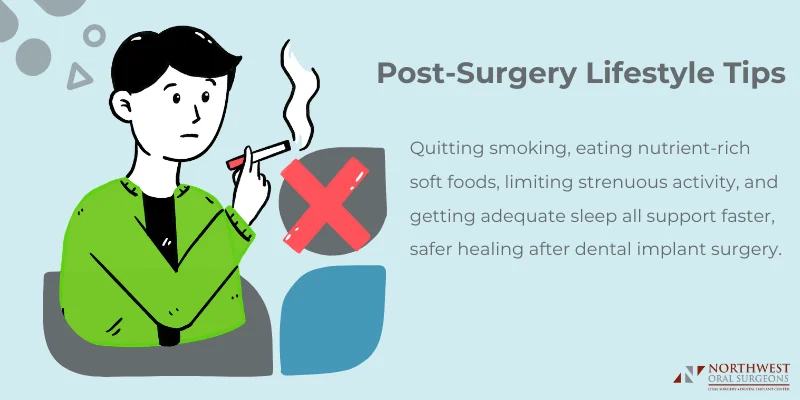
Smoking constricts blood vessels and reduces oxygen delivery to healing tissues. This habit dramatically increases your risk of implant failure and extends recovery time. Quitting smoking at least two weeks before surgery improves your healing outcomes.
Your nutrition choices matter during recovery. Eating enough protein, vitamin C, and vitamin D gives your body the building blocks it needs for tissue repair. Soft foods prevent stress on your surgical site during the initial healing phase.
Physical activity level affects circulation throughout your body. Light movement promotes blood flow, but you should avoid strenuous exercise for the first few days after surgery.
Getting adequate sleep allows your body to focus energy on healing. Your cells repair and regenerate more effectively during rest periods. Aim for seven to eight hours of sleep each night during your recovery.
The Healing Process After Implant Surgery
Recovery from dental implant surgery happens in clear stages over several months. The implant post must bond with your jawbone through osseointegration before you can receive your final restoration.
Stages of Dental Implant Recovery
The dental implant healing process begins immediately after implant placement. Your body starts working to heal the surgical site and integrate the implant.
Initial healing phase (first 1-2 weeks):
- Swelling and minor discomfort peak within 3-5 days
- Soft tissue around the implant begins to close
- Blood clot formation protects the surgical site
Bone healing phase (3-6 months):
- Your jawbone gradually fuses with the titanium implant post
- New bone cells grow around the implant surface
- The implant becomes stable enough to support a crown
During the dental implant healing stages, you may experience common symptoms like swelling, minor bleeding, bruising, and soreness at the implant site. These symptoms are normal and typically improve each day.
You’ll need to follow specific care instructions, including eating soft foods and maintaining gentle oral hygiene around the healing area.
Osseointegration and Implant Stability
Osseointegration is the process by which your jawbone bonds directly to the dental implant metal post. This biological connection creates the foundation for long-term implant stability.
The integration process typically takes 3-6 months to complete. During this time, bone cells attach to the implant surface and form new bone tissue around it. Your bone quality and density affect how quickly this happens.
You cannot rush osseointegration. The implant must remain undisturbed during this critical period. That’s why your dentist won’t attach the permanent crown until imaging confirms the implant has fully integrated.
Factors that support strong osseointegration include good bone density, healthy gums, proper nutrition, and avoiding smoking. Poor oral hygiene or excessive force on the implant site can disrupt this process and lead to implant failure.
Healing Timeline for Older Versus Younger Adults
Dental implant surgery recovery depends more on your health than your age. A healthy adult in their 70s or 80s can often heal just as well as someone younger.
Older adults may take slightly longer to complete osseointegration, but the difference is usually minor. What matters most is your bone quality, overall health status, and lifestyle habits.
Key factors that affect your healing timeline:
- Bone density and quality
- Chronic conditions like diabetes
- Smoking status
- Nutritional intake
- Medication use
The healing time for senior dental implants may be a few extra weeks compared to younger patients, but this doesn’t mean you’re not a good candidate. Your oral surgeon will evaluate your situation and provide a realistic timeline based on your health factors, not your age alone.
Fill out our patient form to book your implant consultation and learn how to support faster, healthier healing after surgery.
Optimizing Healing Outcomes for Seniors
Taking specific steps before and after implant placement can significantly improve healing success in older adults. Proper medical screening, nutrition support, disease management, and careful monitoring all contribute to better outcomes.
Importance of Pre-Surgical Evaluation
Your implant dentist needs a complete picture of your health before surgery. A thorough pre-surgical evaluation includes reviewing all medications you take, checking your bone density, and assessing any conditions that might affect healing.
Your dental check-up should include X-rays and possibly a CT scan to evaluate jawbone quality. Tell your dentist about blood thinners, bisphosphonates, or immunosuppressants you’re taking. These medications can impact healing and may need adjustment before surgery.
Blood tests help identify issues like uncontrolled diabetes or low vitamin D levels. Your dentist may also check your kidney and liver function since these organs process medications used during and after surgery.
If you have heart conditions, you might need clearance from your cardiologist before proceeding with implant-supported dentures or dental crown placement.
Role of Nutrition and Oral Hygiene
Eating enough protein helps your body build new tissue around implants. You need about 1 to 1.2 grams of protein per kilogram of body weight daily during healing. Good protein sources include eggs, fish, chicken, Greek yogurt, and beans.
Key nutrients for implant healing:
- Vitamin C: Helps form collagen for tissue repair
- Vitamin D: Supports bone integration with implants
- Zinc: Reduces inflammation and supports immune function
- Calcium: Strengthens bone around implants
Your oral hygiene routine becomes even more important after implant placement. Use an antimicrobial rinse as directed by your dentist to reduce bacteria that could cause infection. Brush gently around surgical sites with a soft-bristled toothbrush.
Stay hydrated by drinking plenty of water throughout the day. Avoid alcohol and smoking, which significantly slow healing in older adults.
Managing Medical Conditions
Medical conditions common in older adults need careful management during implant healing. Uncontrolled diabetes slows wound healing and increases infection risk. Keep your blood sugar levels stable by monitoring them regularly and following your doctor’s treatment plan.
High blood pressure should stay within target ranges since it affects blood flow to healing tissues. Work with your doctor to manage your blood pressure through medication, diet, and lifestyle changes.
If you have osteoporosis, discuss bisphosphonate medications with both your dentist and doctor. These drugs can affect jawbone healing around implants. Your healthcare team might adjust timing or dosage around your surgery.
Autoimmune conditions require special attention since they affect how your immune system responds to implants. Keep all your healthcare providers informed about your implant surgery so they can coordinate your care effectively.
Follow-Up and Aftercare
Attend all scheduled follow-up appointments so your dentist can monitor healing progress. Your first check-up typically occurs within one to two weeks after surgery. Your dentist will examine the surgical site, check for infection signs, and ensure proper healing.
Report any unusual symptoms immediately, including increased pain, swelling that worsens after the first few days, or discharge from the implant site. These could signal complications that need prompt treatment.
Your aftercare instructions will include specific guidelines for eating, cleaning, and activity restrictions. Follow these directions carefully even if you feel fine. Most complications happen when patients resume normal activities too quickly.
Plan for multiple appointments over several months as your implant integrates with bone. This process takes longer in older adults, often requiring four to six months before final restoration. Patience during this healing period leads to better long-term implant success.
Special Considerations and Alternatives in Older Adults
Older adults considering dental implants need specific treatment modifications and may benefit from alternative approaches that account for age-related bone changes and healing patterns.
Treatment plans for seniors often include bone grafting procedures, modified implant techniques, and streamlined options that reduce treatment time.
Implants for Seniors: Candidacy and Modifications
Age alone doesn’t disqualify you from getting dental implants. Your overall health and bone quality matter more than the number on your birthday cake.
Most dental professionals evaluate your medical history, medications, and existing conditions before recommending implants. If you have well-controlled diabetes, heart disease, or osteoporosis, you may still qualify for treatment with proper management.
Your dentist might modify the standard implant procedure based on your needs. This could mean using shorter implants, adjusting healing times, or choosing specific implant materials. Some practices recommend implants with special surface treatments that promote faster bone integration in older patients.
You’ll need adequate jawbone density to support implants. Your dentist will assess this through X-rays or CT scans during your initial consultation.
Bone Grafting and Bone Preservation
Bone grafting becomes more common in older adults because bone naturally deteriorates after tooth loss. The longer you’ve been without teeth, the more bone loss you’ve likely experienced.
A bone graft adds material to your jaw to create a stable foundation for implants. Your dentist uses bone from your own body, a donor, or synthetic materials. The graft needs time to integrate with your existing bone before implant placement.
Bone preservation techniques help maintain your jaw structure if you need a tooth extraction before implants. Your dentist may place bone graft material immediately after removing a tooth. This prevents the rapid bone loss that typically follows extraction.
Healing from bone grafting takes longer in older adults due to slower cell turnover and reduced circulation. You might wait four to six months or longer before proceeding with implant placement.
Alternatives: All-on-4, Fixed Bridge, and Mini Implants
All-on-4 implants offer a faster solution if you need to replace an entire arch of teeth. This technique uses just four strategically placed implants to support a full set of replacement teeth. You often receive temporary teeth the same day as implant placement.
The All-on-4 approach works well for seniors because it typically avoids bone grafting. The implants are angled to maximize contact with existing bone, even if you have some bone loss.
Fixed bridges supported by implants are another tooth-replacement option. These work well if you’re missing several adjacent teeth. Your dentist places implants on either end of the gap and attaches a bridge of artificial teeth.
Mini implants are smaller in diameter than traditional implants and require less bone volume. They’re less invasive and heal faster, making them suitable if you have significant bone loss or health concerns. However, mini implants aren’t as strong as standard implants and work best for specific situations like stabilizing dentures.
Risks, Complications, and Long-Term Care
Older adults face specific challenges with dental implants that require careful monitoring and proactive care. Understanding potential complications like implant failure and infection, maintaining regular dental visits, and recognizing early warning signs can help protect your investment in oral health.
Risks of Implant Failure and Peri-Implantitis
Implant failure happens when your body doesn’t properly bond with the implant or when infection damages the surrounding tissue. Early implant failure occurs within three to four months of your procedure.
Peri-implantitis is an infection that affects the gum and bone around your implant. This condition causes inflammation and can lead to bone loss if left untreated. You might notice redness, swelling, or bleeding around the implant surface.
Several factors increase your risk:
- Reduced blood flow to healing tissues
- Medications that slow healing
- Existing conditions like diabetes
- Poor oral hygiene habits
- Smoking
Implant mobility is a serious warning sign. Your implant should feel completely stable. Any movement indicates that the implant hasn’t properly integrated with your jawbone or that bone loss has occurred around it.
Long-Term Maintenance and Dental Visits
Your implant-supported dentures or dental crown need regular professional care to last. Schedule dental check-ups every three to six months.
During these visits, your dentist will:
- Check the implant surface for damage
- Measure bone levels around the implant
- Clean areas you can’t reach at home
- Assess how bite forces distribute across your implants
Daily maintenance protects your investment. Brush twice daily and floss around your implants using special floss or interdental brushes. Regular cleaning prevents bacteria buildup that leads to peri-implantitis.
Recognizing and Addressing Healing Complications
Watch for these warning signs during your recovery:
Immediate concerns include severe pain that doesn’t improve with medication, heavy bleeding that continues beyond 24 hours, or fever above 101°F.
Delayed healing signs include persistent swelling after two weeks, discharge or a bad taste near the implant site, or implant loosening. Factors like reduced blood flow, thinner gum tissue, and medications for common age-related conditions can all delay proper healing.
Contact your dentist immediately if you notice any concerning symptoms. Early intervention prevents minor issues from becoming major problems that threaten your implant’s success.
Stop by our Munster or Schererville clinics to learn how we help patients of all ages achieve safe, successful implant healing.
Frequently Asked Questions
Healing times vary based on multiple factors including medications, bone density, nutrition, and existing health conditions. Recovery can differ between single and multiple implants, and age itself plays a specific role in how successfully implants integrate with bone.
What factors can affect healing times in older adults following a dental implant procedure?
Several factors can slow down your healing after getting dental implants. Medications like blood thinners can make recovery take longer because they affect how your body repairs tissues.
Your bone density matters too. If you have osteoporosis or low bone mass, the implant may need more time to fuse with your jaw.
Smoking is one of the biggest factors that can hurt your chances of quick healing. It restricts blood flow to your gums and makes it harder for your body to repair itself.
Chronic conditions like diabetes can also extend your recovery time. When your blood sugar isn’t well controlled, your body has a harder time fighting infections and healing wounds.
Are there any special post-operative care instructions for seniors receiving implants?
You’ll need to follow the same basic care instructions as younger patients, but with extra attention to detail. Keep the implant area clean by gently brushing around it and using any special mouth rinses your dentist recommends.
Stick to soft foods for the first few weeks after surgery. This protects the implant site while it heals.
If you take blood thinners or other medications, make sure your dentist knows about them before your procedure. You might need to adjust your medication schedule, but never stop taking prescribed medications without talking to your doctor first.
Watch for signs of infection like increased swelling, severe pain, or fever. Report these symptoms to your dentist right away since older adults might heal slower because of medicines they take or other health problems.
How does age influence the success rate of dental implant integration?
Age by itself doesn’t determine whether your implants will succeed. Your overall health matters much more than the number on your birthday cake.
Active older adults often heal better than younger patients with health problems. This means a healthy 75-year-old might recover faster than a 50-year-old with multiple medical issues.
The osseointegration process where your bone fuses with the implant typically takes 3-6 months regardless of age. What can change is how smoothly that process goes based on your bone quality and overall health.
Studies show that dental implants have high success rates in seniors, including those in their 80s and 90s. The key is having good bone density and managing any chronic conditions before the procedure.
Can nutritional considerations play a role in the healing process for implants in the elderly?
Good nutrition is essential for healing after implant surgery. Your body needs protein to repair tissues and build new bone around the implant.
Calcium and vitamin D are especially important because they support bone health. These nutrients help your jawbone integrate with the titanium implant post during osseointegration.
Vitamin C helps your gums heal and supports your immune system. You can get it from citrus fruits, strawberries, and bell peppers.
Staying hydrated is also critical for recovery. Drink plenty of water throughout the day to help your body flush out toxins and transport nutrients to healing tissues.
If you have trouble eating solid foods after surgery, consider protein shakes, yogurt, or soft scrambled eggs. These give you nutrients without putting stress on the implant site.
Is there a difference in recovery time for single versus multiple implant placements in older patients?
Multiple implants typically require a longer recovery period than a single implant. Your body has more surgical sites to heal, which takes additional time and energy.
The initial healing phase after surgery usually lasts 1-2 weeks. During this time, you might experience more swelling and discomfort with multiple implants compared to just one.
However, the osseointegration process still takes 3-6 months whether you have one implant or several. All the implants need this time to properly fuse with your jawbone.
If you’re getting a full arch of implant-supported dentures, your dentist might place four to six implants at once. This is still manageable, but you’ll need to be extra careful with your aftercare routine during the first few weeks.
What role do existing medical conditions have on dental implant healing for older adults?
Chronic health conditions can significantly impact how well you heal after implant surgery. Diabetes, autoimmune diseases, and other systemic illnesses may cause slower healing due to reduced ability to repair tissues and fight infections.
Uncontrolled diabetes is particularly concerning because high blood sugar levels interfere with wound healing. If you have diabetes, work with your doctor to get your blood sugar levels stable before having implant surgery.
Osteoporosis can affect how well the implant integrates with your jawbone. You might need a bone graft before getting implants if your bone density is too low.
Heart conditions and high blood pressure need to be managed before surgery. Your dentist will want to know about these conditions so they can plan your treatment safely.
Autoimmune disorders like rheumatoid arthritis or lupus can slow healing because they affect your immune system. You might need to adjust your medications or wait until your condition is better controlled before proceeding with implants.
Late implant failure can occur years after placement due to gradual bone loss, infection, poor oral hygiene, or medical conditions that affect healing. This is why managing your health conditions long-term is just as important as preparing for the initial surgery.