


Dental Anxiety Prevalence (Adults vs. Children)
Dental anxiety is common. The dental anxiety statistics in the United States shows that roughly 15–25% of adults report moderate-to-severe dental anxiety. For example, one U.S. study cites ~19% of adult dental patients as anxious.
Women and younger patients report anxiety more often than men or older adults. Among children, prevalence varies widely by age and setting.
Systematic reviews report 4–20% of preschoolers, 8–23% of 6–12-year-olds, and 7–18% of adolescents exhibit clinical dental anxiety.
A recent meta-analysis found ~30% of children aged 2–6 show high dental fear. Notably, 24% of U.S. pediatric patients may experience significant anxiety. In Indiana, no statewide anxiety surveys are published; one assumes rates comparable to national figures (around 15–25% for adults, perhaps higher in underserved areas).
Dental anxiety often leads to avoidance of care. Surveys estimate ~8% of anxious patients miss appointments due to fear, and nearly one-quarter of patients report moderate-to-severe dental anxiety.
This avoidance can worsen oral health (more caries, tooth loss) and ultimately increase the need for complex treatments, including implants.
Modern dentistry offers multiple ways to reduce stress and discomfort. Ask our team at Munster and Schererville, IN, clinics about sedation options that can help you feel calm and confident during implant procedures.
Sedation in Dental Practice: Types and Usage
Sedation techniques span minimal (nitrous oxide, low-dose oral) to moderate/deep (oral benzodiazepines, IV sedation) to general anesthesia. Nitrous oxide (inhaled “laughing gas”) is by far the most common sedative used in dentistry. Surveys report ~70% of practices offering sedation rely on nitrous oxide.
It provides mild anxiolysis, rapid onset and recovery, and is often first-line for anxious adults and children. Indeed, pediatric sedation guidelines recommend nitrous inhalation as the priority pharmacologic behavior management for ASA I–II children with anxiety.
For longer or more complex procedures, oral sedatives (usually benzodiazepines like triazolam) are common. They are easy to administer but have slower and more variable effects. Many practitioners will combine oral medications with nitrous oxide for “minimal” or moderate sedation.
For example, one clinician reports using IV nitrous ~40–60 cases/month, with ~25% of those also receiving oral sedatives. IV sedation (e.g. midazolam, propofol infusions) provides deeper conscious sedation and is often used by oral surgeons or special-trained dentists for long or traumatic procedures.
Deep sedation or general anesthesia (GA) is reserved for very anxious patients (often young children or special-needs patients) or extensive surgery.
Nationwide trends indicate increasing demand for all sedation levels, driven by patient preference for painless dentistry and the growth of cosmetic/surgical procedures.
Key statistics on sedation:
- Nitrous Oxide: Used in ~70% of practices that offer sedation; excellent safety profile (e.g. one 10-year study in 96 anxious children found zero adverse events across 128 procedures under nitrous sedation).
- Oral Sedation: Widely used for longer treatments; offers deeper anxiolysis than nitrous but requires longer monitoring due to longer recovery.
- Intravenous (IV) Sedation: Employed for moderate sedation; commonly midazolam-based. Controlled studies show IV sedation yields more stable vital signs (lower heart rate/blood pressure) and reduces anxiety more than local anesthesia alone.
Current data on U.S. sedation usage specifically for implant dentistry are limited. However, a systematic review confirms that conscious sedation during implant surgery significantly reduces patient anxiety and increases patient and surgeon satisfaction.
In clinical practice, sedation is now standard in many implant cases: general dentists with specialized permits, oral surgeons, and pediatric dentists frequently use nitrous or IV sedation to ensure patient comfort, particularly when anxiety is present.
Anxiety and Dental Implant Outcomes
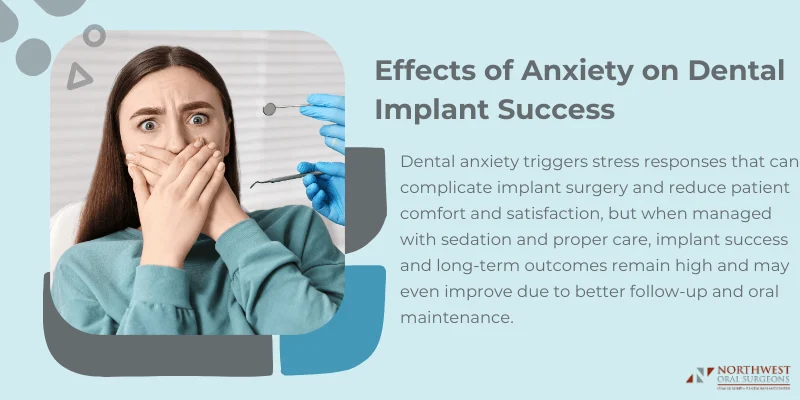
High dental anxiety can adversely affect implant surgery. Physiologically, anxiety triggers a “fight-or-flight” response: increased heart rate, blood pressure and risk of vasovagal episodes during surgery.
In older or medically compromised patients (ASA II–III), this cardiovascular stress raises complication risks. Behaviorally, anxious patients often move or clench during surgery, which can complicate implant placement.
Clinically, preoperative anxiety correlates with worse subjective outcomes. In one series, 72% of implant patients had moderate-to-high anxiety pre-op, which significantly reduced patient satisfaction with the procedure.
Another review found that using sedation notably improves satisfaction: patients and surgeons were more satisfied when sedation was used. In short, anxiety tends to make the implant experience more unpleasant and may indirectly increase the risk of errors or post-op complications.
Importantly, anxiety alone does not inherently doom an implant. Case series show implant success (osseo-integration and survival) remains high even in anxious patients when proper care is taken. For example, one study reported 100% implant survival at 3 years in both anxious (sedated) and non-anxious cohorts.
The difference was that the anxious/sedated group had better long-term maintenance: they attended more follow-up visits and showed improved periodontal health (less bleeding on probing) at 3 years. This suggests that addressing anxiety (via sedation) encourages patients to engage in postoperative care, which ultimately benefits implant health.
Perioperative vs. Long-Term Outcomes
- Perioperative: Anxiety can prolong surgery time, increase bleeding, or precipitate acute events (syncope, tachycardia) if unmanaged. Conscious sedation (oral/IV) helps mitigate this stress. No evidence shows routine sedation increases surgical complications. Instead, IV sedation yields a more stable heart rate/BP intraoperatively.
- Long-Term: Anxiety-related avoidance can lead to neglect of dental implants (poor hygiene, missed checkups). Studies suggest sedated patients have better compliance. For example, Taguchi et al. found that sedated implant patients had more maintenance visits and better gum health. High anxiety in general is associated with poorer oral health and could, over time, jeopardize implant longevity if it leads to neglect.
If dental anxiety has kept you from getting the care you need, you’re not alone. Schedule a consultation to discuss your concerns and explore treatment options tailored to you.
Sedation and Pediatric vs. Adult Patients
Adults: Generally tolerate routine dental care with local anesthesia. Anxious adults often receive nitrous or oral sedation; complex cases may use IV conscious sedation. There is evidence that adult implant patients benefit similarly from sedation: improved comfort and satisfaction without compromising outcome.
Children: Pediatric dental anxiety is particularly high. Many children cannot safely undergo implants (rare under age 15). However, for routine surgical treatments or early implant planning, pediatric sedation is critical. Nitrous oxide is the first-line pharmacologic approach for ASA I–II children with anxiety.
When nitrous (and behavioral techniques) fail, clinics often progress to deeper sedation (oral, intranasal, or GA). A large retrospective pediatric study using only nitrous sedation reported 84–94% treatment success and no serious adverse events. Thus, sedation is safe and effective in children, enabling treatments that otherwise might be impossible.
In Indiana pediatric dentistry, sedation services (e.g. special centers at hospitals) are available but access can be limited by provider availability.
National data (not Indiana-specific) suggest that a majority of pediatric behavior-management cases may require deep sedation or anesthesia – one survey found nearly 80% of pediatric dentistry sedation cases were GA.
Whether Indiana mirrors this is unclear, but availability of pediatric dental anesthesiologists and hospital facilities will influence practice.
National vs. Indiana Trends

Anxiety Rates
There are no published state-specific estimates of dental anxiety for Indiana. National surveys and studies (e.g. HPI/ADA or academic studies) focus on broad U.S. populations. Indiana’s demographics (age, income, rurality) suggest anxiety prevalence may be on par with or slightly higher than national averages.
For context, 20–26% of U.S. patients generally report moderate-severe anxiety; Indiana’s high proportion of low-income and rural residents might correlate with higher dental fear (studies link lower SES with more anxiety). However, without direct data, one can only benchmark Indiana against the 15–25% national range.
Sedation Practices
Nationally, sedation is common in dental practices. By contrast, Indiana appears underserved in sedation services. The state has a dentist shortage (68% of counties are Dental HPSAs), implying fewer specialists to provide sedation dentistry.
Licensing data show Indiana issued only 6 new Dental Anesthesia permits (for moderate/deep sedation or anesthesia) in 2023, a tiny number given ~3,300 practicing dentists in the state. This suggests most Indiana dentists either do not offer (or are not permitted for) advanced sedation beyond nitrous.
For routine sedation: Nitrous oxide and oral sedatives require minimal permits, so many general dentists use them, especially in Indiana’s smaller practices. IV sedation and GA in outpatient settings require permits and specialized training.
Given the low permit count, Indiana likely relies heavily on hospital-based anesthesia (especially for children) or on specialist referrals (oral surgeons, DDS anesthesiologists) for complex cases.
Nationally, sedation dentistry is expanding (with rising market value projected), but Indiana may lag behind. For example, Indiana’s policy environment requires strict credentialing for sedation, which could slow adoption compared to states with looser rules.
Implant Outcomes
No studies specifically compare implant success rates between Indiana and the national average. If anything, Indiana’s shortage of specialists and high-need areas might make implants less accessible, but once placed, implants in Indiana likely behave similarly to those elsewhere.
For example, the national 3- to 5-year survival for well-managed dental implants is typically >95%. Indiana dentists generally follow the same clinical standards (e.g. guidelines from AAOMS/ICOI). However, anecdotal reports suggest that anxious Indiana patients may more often require referral for sedation or multiple visits.
In lack of data, one can note general factors: Indiana’s rural populations may have fewer follow-ups, and high dental anxiety could lead some patients to delay implants until absolutely necessary. Conversely, Indiana’s credentialed professionals (many practicing in urban centers like Indy, Fort Wayne) provide comparable implant care to national peers.
The key Indiana difference is likely in access and management: anxious patients in Indiana may face longer waits or travel farther for sedation, whereas nationally some practices offer sedation widely in-office.
Sedation/Anxiety and Implant Success – Key Findings
- Anxiety Reduction Improves Care: Conscious sedation (oral or IV) reduces patient anxiety and increases satisfaction in implant surgery. This leads to smoother procedures and happier patients.
- Implant Survival Unaffected: Studies show no difference in implant survival due to sedation use. For example, one cohort had 100% 3-year survival in both sedated and non-sedated groups. Thus, sedation itself is not a risk factor for failure.
- Better Follow-Up with Sedation: Sedated patients tended to keep up with maintenance visits and showed better periodontal indices long-term. Increased patient compliance is a tangible benefit of addressing anxiety.
- Satisfaction Gains: Meta-analyses find both patients and surgeons are more satisfied with implant procedures when sedation is used. High pre-op anxiety correlates with dissatisfaction otherwise.
Collectively, the evidence indicates that using sedation to manage anxiety benefits outcomes (through satisfaction and follow-up) without harming implant success rates.
Trends and Projections (2019–2026+)
- Rise of Sedation Dentistry: The global dental anesthesia market is projected to grow substantially (from ~$2.1B in 2024 to ~$2.9B by 2030). This reflects rising use of sedatives in dentistry worldwide. U.S. trends mirror this: more dentists (including generalists) seek sedation training, and dental anesthesiology is now a recognized specialty. We can expect increased availability of sedation for implants and other treatments. New technologies (computerized delivery, non-injectable anesthetics) and better safety protocols will also drive growth.
- Behavioral Health Focus: Public health initiatives increasingly target dental fear. Programs promoting anxiety screening (e.g. using MDAS or VAS scales) are expanding. Educational campaigns may raise awareness of sedation options. If successful, these could increase the proportion of anxious patients who accept care (using sedation or other aids). Indiana’s dental safety net (Community Health Centers, public clinics) is gradually incorporating anxiety management training, which may improve outcomes by 2026.
- Population Aging: The U.S. elderly population (and Indiana’s) is growing. Older adults often need more implants and tend to have higher anxiety due to complex health. This trend suggests demand for implants and for safe sedation techniques will both rise. Indiana, with a sizable rural elderly population, will feel this acutely, sedation services for senior implant patients will become even more important.
- Pediatric Demand: Childhood dental anxiety remains a major issue. Innovations (e.g. virtual reality distraction, improved behavior therapy) may complement sedation. Sedation guidelines (AAPD, AAP) continue to favor nitrous for routine cases and GA for uncooperative kids. The percentage of young children receiving GA in dental settings might continue rising if safe outpatient centers expand. Indiana’s children’s hospitals (e.g. Peyton Manning Children’s) are likely to handle growing sedation caseloads.
- Economic/Social Factors: Because dental anxiety is linked to past trauma and access barriers, social determinants will influence trends. Efforts to integrate dental and mental health (screening for anxiety in primary care) could increase identification of fearful patients and prompt referral to sedation dentistry. If Indiana invests in dental workforce solutions (e.g. compacts, incentives), more providers may obtain sedation permits, potentially lowering anxiety-driven avoidance.
In summary, anxiety and sedation in implantology will remain intertwined. Between 2026–2030, anticipate increasing use of moderate sedation (oral/IV) in implant clinics, continued prevalence of anxiety in ~1/4 of patients, and more robust evidence linking sedation to better perioperative experiences (if not higher survival rates).
In Indiana specifically, workforce challenges may temper these trends, but state agencies and professional groups are likely to promote sedation training and anxiety management as part of broader oral health initiatives.
Have questions before scheduling? Submit our quick patient form, and we’ll help you understand your options and plan your visit with confidence.
References
- Ferguson B et al., Cochrane Database Syst Rev 2024 – provides prevalence ranges of dental fear by age.
- Purohit A et al., Front Psychol 2025 – “In the US, ~19% of adults and 24% of children/adolescents report dental anxiety”.
- Dimensions of Dental Hygiene (Nov 2025) – “~15% of adults have dental anxiety; higher in women, declines with age”.
- Klose SL (AGD) Jan 2022 – Survey: ~26% have moderate/severe anxiety; 8% skip visits for it; 70% of sedation-offering practices use nitrous.
- Peric R et al., Int J Environ Res Public Health 2024 – Global survey: ~15.3% adult anxiety (12.4% high; 3.3% phobic).
- Aslan M et al., BMC Oral Health 2025 – 96 anxious children treated with N₂O; 128 procedures with zero adverse events; sedation safe and effective.
- Taguchi Y et al., Implant Dent (Res Sq) 2023 – 67 implants (IV sedation vs none): 3-yr survival 100% both; sedated group had lower bleeding and more maintenance visits.
- Bowen Center (IU) 2025 – Indiana dental workforce report: 68% of Indiana counties are dental HPSAs.
- Indiana Professional Licensing (Press Release 2024) – Only 6 new dental anesthesia permits issued in 2023.
- Pourabbas R et al., Dent Med Probl 2022 – Meta-analysis: conscious sedation during implant surgery reduces anxiety and raises patient/surgeon satisfaction.