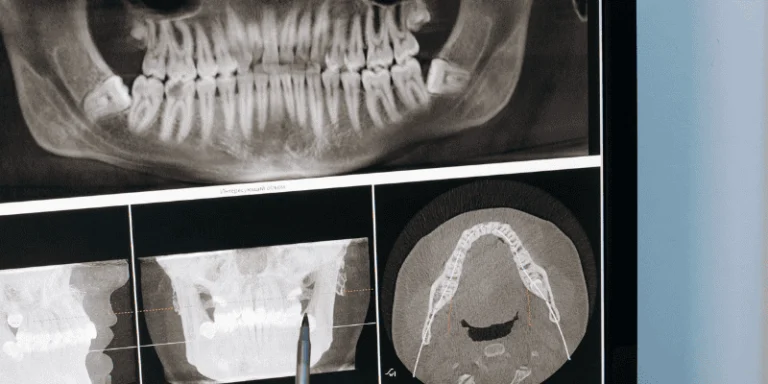


About 178 million Americans are missing at least one tooth, and many face a tough choice about what to do next. You might think leaving a gap from a missing tooth is no big deal, especially if it’s not visible when you smile.
But that empty space can trigger a chain of problems that affect your jawbone, gums, and nearby teeth over time.
A single tooth implant acts like an artificial tooth root that helps prevent bone loss and protects your oral health, while leaving a gap can lead to bone shrinkage, tooth shifting, and bite problems.
When you lose a tooth, your jawbone stops getting the stimulation it needs from chewing. This causes the bone to break down gradually, which can change your face shape and weaken support for other teeth.
The choice between a single-tooth implant, bridge, or leaving a gap creates different effects on bone density, gum health, and the teeth next to the missing space.
Understanding what happens when you leave a gap versus getting an implant helps you make a smart decision for your long-term health. The differences go beyond just filling an empty spot in your smile.
Key Takeaways
- Single tooth implants prevent jawbone loss by stimulating bone tissue like a natural tooth root
- Leaving a gap untreated leads to adjacent teeth shifting and bite alignment problems
- Implants last longer and require less maintenance than bridges while protecting surrounding teeth
Key Differences: Single Tooth Implants, Dental Bridges, and Untreated Gaps
A dental implant replaces both the root and crown of your missing tooth, while a bridge uses neighboring teeth for support. Leaving a gap untreated can lead to shifting teeth and bone loss over time.
How a Single Tooth Implant Works
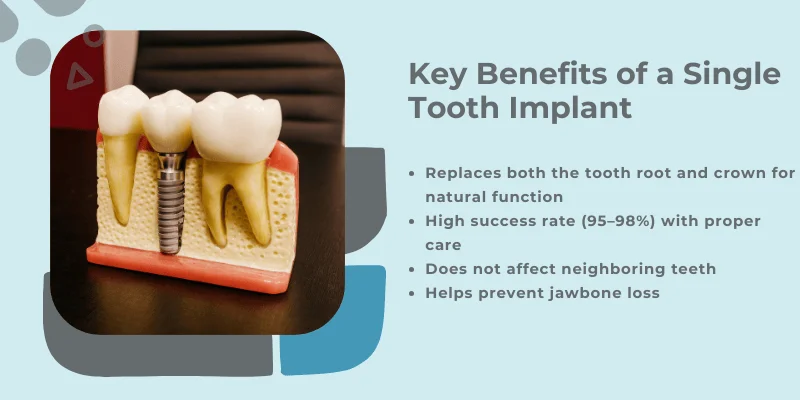
A single tooth implant replaces your missing tooth by placing a titanium post directly into your jawbone. This post acts as an artificial tooth root that fuses with your bone over several months.
Once the implant heals, your dentist attaches a custom crown on top. The crown matches your natural teeth in color and shape.
This setup works like your original tooth because it has both a root and visible part. Single-tooth implants have a survival rate of 95-98% when properly placed and cared for.
The implant doesn’t rely on your adjacent teeth for support, so those teeth stay healthy and untouched. You can brush and floss around a tooth implant just like a natural tooth.
The implant helps keep your jawbone active and prevents bone loss in that area.
What is a Dental Bridge?
A dental bridge fills the space left by your missing tooth using a false tooth called a pontic. The pontic connects to crowns placed on the teeth next to your gap.
Your dentist shapes these adjacent teeth to fit the crowns that hold the bridge in place. This means healthy teeth get permanently altered to support the replacement.
Dental bridges typically last 10 to 15 years before needing replacement. The bridge sits on top of your gums rather than in your jawbone.
Cleaning under a bridge requires special floss or interdental brushes. Food and plaque can get trapped underneath, which increases your risk for decay.
Research shows that secondary caries of abutment teeth is a major biological complication associated with fixed dental prostheses. This confirms that decay of the supporting teeth plays a substantial role in bridge failure outcomes.
What Happens If You Leave a Gap?
When you leave a gap from a missing tooth, your other teeth start to shift into that empty space. Your adjacent teeth can tilt or drift, which changes your bite and makes chewing harder.
Your jawbone in the gap area stops getting stimulation from a tooth root. Without this stimulation, the bone shrinks and loses density over time.
This bone loss can change your face shape and make your jaw weaker. The teeth above or below the gap may also move or grow longer trying to find something to bite against.
This creates problems with alignment throughout your whole mouth. Gaps make it harder to clean your teeth properly and can trap food.
This increases your chances of gum disease and tooth decay in nearby teeth.
Protect your facial structure and smile by scheduling a consultation in Schererville, IN. Early tooth replacement can help preserve jawbone support and prevent premature facial changes.
Long-Term Impact on Bone and Gum Health
When you leave a gap after losing a tooth, your jawbone begins to shrink because it no longer receives stimulation from the tooth root. A single tooth implant with a titanium post acts like a natural root and keeps your bone healthy through ongoing stimulation.
Bone Preservation and Bone Loss
Your jawbone needs constant stimulation to maintain its density and structure. When you have a missing tooth, the bone in that area starts to deteriorate within just a few months.
The bone can shrink by 25% in width during the first year after tooth loss. This happens because your jawbone responds to pressure from chewing, and without a tooth root, that area stops receiving the signals it needs to stay strong.
A single tooth implant prevents this problem. The titanium root is placed directly into your jawbone, where it provides the same kind of stimulation that a natural tooth root would give.
This keeps the bone active and healthy. If you leave a gap, bone loss can impact your oral health and change the shape of your face over time.
Your cheeks may look sunken, and nearby teeth can shift into the empty space. Severe bone loss might require bone grafting later if you decide to get an implant.
Osseointegration and Bone Density
Osseointegration is the process where your jawbone fuses with the titanium post of an implant. This creates a permanent bond that makes the implant as stable as a natural tooth.
The titanium post is biocompatible, which means your body accepts it and grows bone tissue around it. This process usually takes three to six months to complete.
Once osseointegration happens, the implant becomes part of your jaw structure. This fusion actively maintains your bone density.
Every time you chew, the pressure travels through the implant into your jawbone. Your body recognizes this activity and continues producing new bone cells in that area.
Without osseointegration from an implant, your bone density decreases. The gap in your mouth means no stimulation reaches that section of your jawbone.
Studies show that people who leave gaps can experience significant changes in bone density within the first few years.
Gum Health and Risk of Gum Disease
Your gum tissue needs support from underneath to stay healthy and firm. When you leave a gap, the gums in that area have nothing to hold them in place.
They can recede and become vulnerable to infection. Food particles and bacteria easily collect in gaps where teeth are missing.
This buildup increases your risk of gum disease in the surrounding area. The neighboring teeth also become harder to clean properly.
A single tooth implant supports your gum tissue and helps it maintain its natural shape. The custom crown sits at gum level just like a natural tooth would.
This makes it easy to brush and floss normally. Implants provide better long-term oral health support for your gums compared to leaving a gap.
Your gum tissue stays attached to the implant crown, creating a protective seal that keeps bacteria out. This reduces inflammation and helps prevent periodontal problems that could affect other teeth in your mouth.
Effects on Adjacent and Opposing Teeth
When you lose a tooth, your decision affects more than just the empty space. The teeth next to the gap and the ones that bite against it experience changes in pressure, position, and health depending on whether you choose an implant, bridge, or leave the space empty.
Alteration of Adjacent Teeth with Bridges
Dental bridges require significant changes to your healthy teeth on either side of the gap. Your dentist must file down these abutment teeth to create room for the crowns that will hold the bridge in place.
This means removing about 60-75% of the natural tooth structure from two otherwise healthy teeth. Once your abutment teeth are prepared, they can never return to their original state.
These teeth now bear extra chewing forces because they support both themselves and the replacement tooth in between. This added stress can lead to increased wear over time.
The teeth supporting your bridge also become harder to clean. Food and bacteria can get trapped under the false tooth, putting your abutment teeth at higher risk for decay and gum disease.
You’ll need special floss threaders or water flossers to keep the area clean.
Shifting and Wear from Leaving a Gap
When you leave a single tooth missing, the teeth on either side start to drift into the empty space. This movement typically begins within months and continues gradually over years.
Your adjacent teeth tilt toward the gap, creating new spaces between other teeth where food gets stuck. The tooth that used to bite against your missing tooth also shifts.
It erupts further out of the gum because it no longer has anything to press against. This process changes your bite alignment and creates uneven chewing forces across your remaining teeth.
Your jawbone in the gap area also shrinks without a tooth root to stimulate it. This bone loss can affect the stability of neighboring teeth over time.
The uneven distribution of chewing forces causes some teeth to wear down faster than others, leading to sensitivity and potential damage.
Impact of Implants on Neighboring Teeth
Single tooth implants work independently without requiring changes to your adjacent teeth. The titanium post goes directly into your jawbone, so your neighboring teeth stay completely untouched and intact.
This preserves the natural structure and health of the teeth around the gap. Research shows that teeth next to implants have a slightly higher risk of developing certain issues.
About 2.55% of adjacent teeth showed periapical radiolucent lesions after implant placement, with a risk 2.12 times higher compared to teeth not next to implants. These problems may occur due to trauma during implant surgery or changes in how forces distribute during chewing.
Despite these risks, implants distribute chewing forces more naturally than other options. The dental restoration sits on its own root-like support, which helps maintain proper spacing and prevents the shifting problems you’d see with a gap.
Learn which tooth replacement option best fits your lifestyle by booking a visit to our Schererville, IN office. We’ll help you choose a solution that’s easy to maintain and built to last.
Longevity and Maintenance Considerations
Single tooth implants typically last 15-25 years or longer with proper care, while traditional bridges need replacement every 5-15 years. Daily cleaning routines differ significantly between the two options, and each comes with its own set of potential complications that affect long-term costs.
Durability and Lifespan of Implants vs Bridges
A single tooth implant offers long-term value that often exceeds traditional alternatives. The titanium post can last a lifetime when properly maintained.
Your implant crown typically needs replacement after 10-15 years due to normal wear. Traditional bridges have a shorter lifespan.
Most last between 5-15 years before requiring replacement. The teeth supporting your bridge bear extra pressure, which can weaken them over time.
Success rates favor dental implants:
- Implants show 95-98% success rates after 10 years
- Bridges have 80-90% survival rates over the same period
- The health of neighboring teeth affects bridge longevity
Your jawbone stays strong with an implant because the titanium post stimulates bone growth. A bridge doesn’t provide this benefit, which can lead to bone loss under the missing tooth area.
Oral Hygiene Needs and Daily Care
Dental implants require similar care to natural teeth. You brush twice daily and floss once per day.
A water flosser helps clean around the implant effectively. Bridges demand more attention during your daily routine.
You need to clean underneath the false tooth where food particles collect. A floss threader or interdental brush helps you reach these difficult spots.
Daily maintenance comparison:
| Care Type | Implant | Bridge |
| Brushing | Standard technique | Standard plus bridge attention |
| Flossing | Normal flossing | Threader or special tools required |
| Time needed | 2-3 minutes | 4-5 minutes |
Regular dental check-ups remain important for both options. Your dentist examines the implant site and surrounding gums every six months.
Bridge checkups include inspecting the supporting teeth for decay or damage.
Common Complications and Repairs
Implant complications occur in less than 5% of cases. Infection around the implant site is the most common issue.
Your dentist can treat this with antibiotics and improved oral hygiene habits. The implant crown may chip or crack from heavy grinding or injury.
Replacement crowns cost $1,000-$3,000. The titanium post rarely fails once it integrates with your jawbone.
Bridge problems happen more frequently. The supporting teeth can develop cavities underneath the crowns.
You might need root canals or extractions if decay spreads. Common bridge issues include:
- Loosening of the cement holding the bridge
- Fractures in the false tooth or supporting crowns
- Decay in the anchor teeth requiring bridge replacement
- Gum recession around the bridge margins
Bridge repairs often mean replacing the entire structure. You can’t fix just one part without affecting the others.
Aesthetic, Functional, and Lifestyle Impacts
Missing even one tooth affects how you look, eat, and speak every day. The choice between getting a single tooth implant or leaving the gap creates different outcomes for your facial appearance, ability to chew properly, and overall comfort.
Facial Structure and Appearance
When you lose a tooth and leave the gap, your jawbone starts to break down in that area. This bone loss can change your facial structure over time.
Your cheeks may appear sunken, and the area around your mouth can look older than it should. A single tooth implant prevents this bone loss by acting like a natural tooth root.
The implant keeps your jawbone healthy and maintains your face’s natural shape. You also get a custom crown that matches your other teeth in color and size.
Visual appearance and aesthetics play an important role in tooth replacement decisions. A dental crown on top of the implant looks completely natural.
Leaving a gap visible when you smile can affect your confidence. You might find yourself covering your mouth or smiling less around others.
Bite Function and Chewing
Your teeth work together as a system when you chew food. When one tooth is missing, the others must work harder to make up for it.
This extra pressure can damage healthy teeth over time. The teeth next to the gap may start to shift into the empty space.
This movement creates bite problems that affect how your upper and lower teeth fit together. You might notice pain in your jaw or have trouble chewing certain foods.
A single tooth implant restores your full chewing power. You can eat all the foods you enjoy without worry.
The implant handles the same force as a natural tooth, so your other teeth don’t have to compensate. Missing a single tooth can lead to problems with bite alignment and oral health.
Your back teeth may wear down faster if front teeth are missing, or vice versa.
Speech and Comfort
Your teeth help you make certain sounds when speaking. Missing teeth, especially in the front of your mouth, can cause you to whistle or lisp.
You might struggle with words that use “s,” “t,” or “th” sounds. A gap can also trap food particles, which feels uncomfortable and requires constant attention.
Your tongue naturally moves toward the empty space, which can become a distracting habit. An implant with a dental crown fills the space completely.
Your speech returns to normal because the crown sits exactly where your natural tooth was. You don’t need to think about the missing tooth when talking or eating.
The implant feels stable and permanent, unlike removable options. You can speak confidently in meetings, social situations, and presentations without worrying about your teeth.
Treatment Selection: Factors and Cost Considerations
Several key factors determine whether you’re a good candidate for a single tooth implant, including bone density, overall health, and budget.
The treatment timeline spans several months, while costs require balancing upfront expenses against decades of benefits.

Criteria for Candidate Selection
Your eligibility for a single tooth implant depends on multiple health and anatomical factors. You need adequate bone density in your jaw to support the implant post.
If you’ve been missing a tooth for a long time, your bone may have deteriorated and require grafting first. Your overall health plays a major role too.
Conditions like uncontrolled diabetes or active gum disease can affect healing. Heavy smoking reduces success rates because it slows bone integration with the implant.
Factors influencing treatment planning decisions include the ability to restore the tooth properly, bone quality, appearance needs, cost-benefit analysis, health conditions, and your personal preferences.
Your dentist will also consider the space available and your bite alignment. Age isn’t typically a barrier for adults.
However, younger patients need to wait until their jaw growth is complete, usually around age 18-21.
Treatment Timeline and Recovery
The implant process takes 3-6 months from start to finish. Your first appointment involves placing the titanium post into your jawbone.
This surgical procedure usually takes 1-2 hours. You’ll need 3-4 months for osseointegration, which is when your bone fuses with the implant.
During this healing period, you might wear a temporary tooth. You can return to work within a few days of surgery, though you’ll need to eat soft foods for about a week.
Once healing is complete, your dentist attaches an abutment (connector piece) and takes impressions for your crown. The final crown placement happens 2-3 weeks later.
A bridge typically requires only 2-3 weeks total. This faster timeline comes at the cost of grinding down healthy adjacent teeth.
Initial Cost vs Long-Term Value
Single tooth implants typically cost $3,000-$6,000 depending on your location and case complexity. Bridges cost $2,000-$5,000 initially, appearing cheaper at first glance.
Implants can last 25+ years or even a lifetime with proper dental care. Bridges typically need replacement every 10-15 years.
When comparing implant vs bridge costs over 10 years, implants often prove more economical.
You’ll likely need at least one bridge replacement in that timeframe, adding $2,000-$5,000 more. Implants prevent bone loss that occurs with gaps or bridges.
This preservation protects neighboring teeth and prevents the facial sagging that comes from bone deterioration.
However, the best way to understand your true costs and long-term value is through a professional consultation, where your oral health, goals, and treatment options can be fully evaluated.
Schedule a consultation with Northwest Oral Surgeons to receive a personalized evaluation, clear cost breakdown, and expert guidance on the best long-term solution for your smile.
Frequently Asked Questions
What are the potential long-term consequences of not replacing a missing tooth?
When you leave a gap in your mouth, the teeth next to it start to shift and tilt into the empty space. This movement happens slowly over months and years.
Your bite changes as teeth move out of alignment. The effects of missing a single tooth include bone loss in your jaw where the tooth root used to be.
Without a root to stimulate the bone, your body breaks down and absorbs the bone tissue. This process starts within the first year after tooth loss.
Your opposing tooth can also grow longer into the gap because nothing stops it. This creates more bite problems and makes future tooth replacement harder.
The shifting teeth become more difficult to clean, which increases your risk of cavities and gum disease.
How does a single tooth implant benefit my overall dental health?
A single tooth implant replaces both the visible crown and the root beneath your gums. The titanium post acts like a natural root and keeps your jawbone active and healthy.
Your bone stays strong instead of shrinking away. Your neighboring teeth stay in place because the implant fills the gap completely.
You can brush and floss around an implant just like a natural tooth. Dental implants offer superior long-term value by protecting your other teeth from extra stress.
The implant distributes chewing forces into your jawbone naturally. This keeps your bite balanced and prevents wear on other teeth.
Are there any risks associated with dental implants that I should be aware of?
Dental implant surgery carries the same basic risks as other dental procedures. You might experience swelling, bruising, or minor bleeding after the procedure.
These symptoms typically go away within a few days. Infection at the implant site can occur if bacteria get into the surgical area.
Your dentist will give you specific instructions for keeping the area clean during healing. Following these directions closely reduces your infection risk.
Some implants fail to bond properly with the jawbone. This happens in about 5% of cases.
Smoking, uncontrolled diabetes, and certain medications can increase this risk. Nerve damage is rare but possible if an implant is placed too close to a nerve.
This can cause numbness or tingling in your lips, tongue, or chin. Your dentist uses X-rays and scans to plan the exact placement and avoid nerves.
Can leaving a gap after tooth extraction affect my bite or jawbone over time?
Missing a single tooth changes your bite as surrounding teeth drift into the space. Your upper and lower teeth no longer meet correctly when you close your mouth.
This puts uneven pressure on certain teeth when you chew. Your jawbone begins to deteriorate within months of losing a tooth.
The bone can lose up to 25% of its width in the first year alone. This bone loss continues over time and affects the shape of your face.
The impact on oral health and bone loss becomes more severe the longer you wait. Your jaw gets weaker and may not support an implant later without additional bone grafting procedures.
What maintenance is required for a single tooth implant compared to a natural tooth?
You care for a dental implant the same way you care for your natural teeth. Brush twice a day and floss daily around the implant crown.
Regular dental cleanings every six months help keep the implant healthy. Your dentist will check the implant during routine visits to make sure it stays stable.
The implant itself cannot get cavities because it is made of titanium and ceramic materials. However, the gum tissue around it needs proper care to prevent infection.
Most implants last 25 years or longer with good oral hygiene. Natural teeth require the same maintenance but are more vulnerable to decay and damage over time.
How do the costs of dental implants compare to the potential costs of future dental problems from leaving a gap?
A single tooth implant typically costs between $3,000 and $5,000 upfront. This includes the surgical placement, the post, and the crown.
Many dental offices offer payment plans to spread out this cost.
Leaving a gap can lead to expensive problems over many years. You might need orthodontic work to fix shifted teeth, which costs $3,000 to $8,000.
Root canals on damaged neighboring teeth run $1,000 to $1,500 each.
Bone grafting procedures become necessary if you wait too long and lose too much jawbone. These grafts add $500 to $3,000 to the cost of a future implant.
You may also need crowns on teeth that wear down from the changed bite, at $1,000 to $2,500 per crown.