

Missing teeth can feel like something you can deal with later. Maybe you think dentures will work fine for now, or you just want to avoid the dental chair a little longer.
But patients who wait to get dental implants almost always share the same feeling when they finally move forward with treatment.
The biggest regret patients have after delaying dental implant treatment is realizing how many years they spent struggling with eating difficulties, feeling self-conscious about their smile, and watching their oral health decline when they could have been living normally.
The time lost dealing with loose dentures, avoiding certain foods, and hiding your smile in photos adds up quickly. Many patients report wishing they hadn’t spent years with these limitations when implants could have restored their confidence and comfort much sooner.
The decision to delay dental implants often comes from understandable concerns about cost, fear of the procedure, or simply putting off what seems like a big decision.
But waiting creates problems that go beyond your teeth. Your jawbone continues to deteriorate, surrounding teeth shift out of place, and early-stage treatments that would have been simpler become more complex and expensive.
Key Takeaways
- Patients most regret the years spent unable to eat comfortably, smile confidently, and live without dental limitations
- Delaying implants leads to bone loss, shifting teeth, and more complicated treatment that costs more money
- Acting sooner preserves your jawbone health and gives you better long-term results with easier recovery
The Most Common Regrets After Delaying Implant Treatment
Many patients who wait to get dental implants wish they had acted sooner. The delay often leads to problems that affect daily life, from trouble eating favorite foods to changes in how they look and speak.
Worsening Oral Health and Bone Loss
When you lose a tooth, your jawbone begins to shrink because it no longer gets the stimulation it needs from chewing. This bone loss can start within months of tooth loss and continues to worsen over time.
Without enough bone, placing a dental implant becomes more difficult. You might need extra procedures like bone grafting before your dentist can even start the implant process. These added steps mean more appointments, longer treatment times, and higher costs.
The bone loss doesn’t just affect the missing tooth area. Your remaining teeth can shift into the empty space, creating gaps and changing your bite. This movement makes it harder to keep your teeth clean and increases your risk of gum disease and tooth decay.
Complications with Chewing and Eating
Delaying dental implant treatment often leads to serious difficulty chewing that affects what you can eat. You might find yourself avoiding crunchy vegetables, nuts, or tough meats because they’re too hard to manage.
Many people start favoring one side of their mouth to chew, which puts extra stress on those teeth. This uneven pressure can cause jaw pain and wear down your teeth faster than normal. Over time, you may notice that meals take longer or feel less enjoyable.
The changes in your diet can affect your overall health too. When you can’t eat nutritious foods comfortably, you might switch to softer, processed options that don’t provide the same nutrients your body needs.
Speech and Appearance Changes
Missing teeth create gaps that can affect how you form certain sounds, especially “s” and “th” sounds. You might notice a slight whistle or lisp when you talk. These speech changes can make you feel self-conscious during conversations or meetings.
Your facial appearance gradually changes as jawbone loss progresses. The lower part of your face may look sunken or older than it should. Your lips might lose support, and lines around your mouth can become deeper. These changes happen slowly, so you might not notice until they become more obvious.
Progression of Dental Problems With Delayed Treatment
When you put off getting a dental implant, the problems in your mouth don’t stay the same. They get worse over time and create new issues that make treatment harder and more expensive later on.

From Missing Tooth to More Severe Tooth Loss
A single missing tooth creates a domino effect in your mouth. The teeth adjacent to the gap begin to shift and tilt into the gap. This movement occurs slowly but changes your bite and places extra pressure on teeth that weren’t designed to handle it.
Your opposing tooth (the one that used to meet the missing tooth when you chewed) will start to grow longer because nothing is stopping it. This is called a super-eruption. These shifting teeth become harder to clean properly, which increases your risk of cavities and gum disease.
The teeth that take on extra chewing work often develop cracks or wear down faster than normal. The progression of dental issues means that what started as one missing tooth can lead to needing treatment on several other teeth.
Some patients lose additional teeth because they waited too long to replace their first tooth.
If you’ve been delaying dental implant treatment, now is the time to learn what your options really are. Contact Northwest Oral Surgeons today to understand how simple and comfortable treatment can be today.
Jaw Pain, Misalignment, and Orthodontic Issues
When your bite changes due to a missing tooth, your jaw has to work differently to chew food. This puts strain on your jaw joints, which can lead to TMJ problems. You might notice clicking sounds, headaches, or pain when you open your mouth wide.
The misalignment gets worse the longer you wait. Your jaw may shift to one side to compensate for the gap, and this can change the shape of your face over time. Some patients need orthodontic treatment to move their teeth back into the right positions before they can even get an implant.
Common symptoms of delayed treatment include:
- Chronic jaw pain or soreness
- Difficulty chewing on one side
- Uneven tooth wear
- Changes in how your teeth fit together
Fixing these alignment problems takes more time and money than it would have cost to get the implant right away.
Bone Deterioration and Impact on Implant Success
Your jawbone needs stimulation from tooth roots to stay strong and healthy. When you lose a tooth, the bone in that area starts to shrink. This process is called resorption, and it begins within the first few months after tooth loss.
Bone loss worsens over time. After a year, you can lose up to 25% of the bone width in that area. This creates a serious problem because dental implants need enough bone to hold them securely in place.
If you wait too long, you might not have enough jawbone left for a standard implant. You’ll need bone grafting surgery first, which adds months to your treatment time and thousands of dollars to the cost.
In some cases, extensive bone loss makes implants much more difficult or even impossible without multiple procedures. Getting an implant soon after losing a tooth helps preserve your bone and gives you the best chance for a successful, straightforward procedure.
Emotional and Lifestyle Impact of Waiting Too Long
Delaying dental implants affects more than just your oral health. Missing teeth create emotional struggles and lifestyle changes that grow worse the longer you wait.
Loss of Confidence and Quality of Life
A missing tooth changes how you see yourself and how you interact with others. You might find yourself covering your mouth when you smile or laugh. Many people stop smiling in photos altogether.
Eating becomes difficult and stressful. You may avoid certain foods you once enjoyed because chewing hurts or feels awkward. This affects your nutrition and takes away simple pleasures like sharing meals with friends and family.
Your speech can change, too. Gaps in your teeth affect how you pronounce words. You might feel embarrassed during conversations at work or social events.
Sleep quality often suffers as well. Research shows that anxiety and poor quality of life deteriorate with increasing wait time, making daily activities harder to manage. The physical discomfort from a missing tooth can keep you awake at night.
Social, Emotional, and Psychological Consequences
Waiting for treatment causes anxiety, depression, and stress that builds over time. You might withdraw from social situations to hide your missing tooth. Dating, job interviews, and public speaking become sources of dread instead of opportunity.
The emotional burden affects your relationships. You may feel irritable or frustrated because of ongoing discomfort. Being stuck in limbo while waiting prevents you from moving forward with your life.
Work performance can decline when you’re dealing with pain and self-consciousness. Some people avoid certain career opportunities because they feel insecure about their appearance. The longer you delay getting dental implants, the more these psychological effects compound and interfere with your daily happiness.
The sooner you replace missing teeth, the easier your treatment often becomes. Schedule a visit at our Munster or Schererville, IN clinic to learn what steps you can take now to protect your bone and oral health.
Financial and Treatment Challenges After Delayed Implants
Waiting to get dental implants can turn a straightforward procedure into a complicated and expensive ordeal. The longer you wait, the more likely you’ll need additional procedures that drive up costs and extend your treatment timeline.
Increased Treatment Complexity and Costs
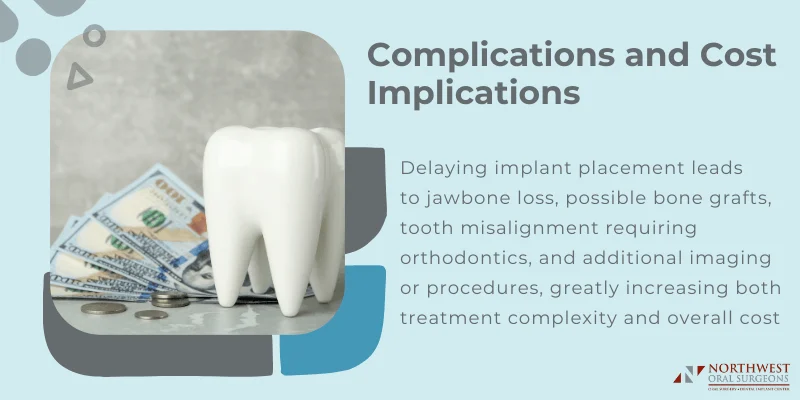
When you delay implant placement, your jawbone starts to deteriorate without a tooth root to stimulate it. This bone loss means you’ll likely need bone grafting before you can even get your implant.
Delayed implants often require bone grafting due to jawbone deterioration, which can add $7,000 to $10,000 to your original treatment cost.
Your surrounding teeth may also shift into the empty space. This creates alignment problems that require orthodontic treatment before implant placement can happen. Each additional procedure adds to your final bill and makes the process more complicated.
The financial impact keeps growing the longer you wait. What starts as a simple implant procedure can become a multi-step process involving:
- Bone grafting surgery
- Healing time between procedures
- Orthodontic corrections
- More complex surgical techniques
- Additional imaging and consultations
The cost of delay can far exceed the original treatment expense over time.
Longer Recovery Times and Extended Treatment Timelines
The additional procedures you’ll need after delaying implant treatment mean your recovery takes much longer. A bone graft requires several months of healing before your implant can be placed. You’re looking at an extended treatment timeline that stretches what could have been a few months into a year or more.
Each procedure comes with its own recovery period. You’ll need time off work for multiple appointments instead of just one or two. The healing process between bone grafting and implant placement alone can take four to six months.
If you need orthodontic work to correct shifted teeth, that adds even more time. Your implant treatment becomes a lengthy process with multiple stages, each requiring patience and careful monitoring.
Special Considerations for All-on-4 and Advanced Implant Options
All-on-4 implants offer a full-arch solution with just four implants per jaw, but they present specific challenges distinct from traditional single-implant procedures. Planning becomes more complex, and certain complications are unique to this treatment approach.
Unique Regrets Associated With All-on-4 Implants
Many patients experience regrets after All-on-4 implants when their results don’t match their expectations. The most common complaints include ongoing pain, higher-than-anticipated costs, and dissatisfaction with the final teeth’s appearance.
The financial commitment can surprise you. While All-on-4 costs less than placing individual implants for each tooth, you still face several thousand dollars per arch. Insurance typically covers only a small portion.
Appearance issues often cause regret. The prosthetic teeth may look bulky or feel unnatural in your mouth. Some patients notice gaps between their gums and the prosthetic.
Common All-on-4 problems also include implant failure and complications during healing. If one of the four implants fails, it can affect the entire arch. You might need additional surgery to fix these issues, adding more time and expense to your treatment.
Eligibility and Planning for Complex Cases

Not everyone qualifies as a good candidate for All-on-4 dental implants. Your jawbone needs enough density and volume to support the angled implants that this technique uses.
If you have severe bone loss from delaying treatment, you might need bone grafting first. This adds months to your timeline and increases costs. Some patients discover they’re not eligible only after consultation, which can be disappointing.
Your dentist should evaluate several factors:
- Bone quality and quantity in your jaw
- Existing infections or gum disease
- Medical conditions like uncontrolled diabetes
- Smoking habits that affect healing
Complex cases require careful planning with detailed imaging and precise measurements. Choosing an experienced provider matters significantly. Practitioners who have completed hundreds of cases face fewer complications than those new to the procedure.
Putting off care can make treatment more complex later. Fill out the new patient form to create a plan that fits your timeline, needs, and comfort level at the Northwest Oral Surgeons.
Frequently Asked Questions
Many people have similar questions when deciding whether to move forward with implant treatment. Understanding the real consequences of waiting can help you make an informed choice about your oral health.
What are the common concerns patients have about getting implants?
Cost is often the biggest barrier to getting implants. Many patients worry about whether they can afford the upfront investment, even though implants typically save money over time compared to temporary solutions.
Fear of pain during the procedure is another common worry. Most patients are surprised to learn that modern techniques and sedation options make the process more comfortable than expected.
Some people question whether they’re good candidates for implants. They may worry about their age, existing health conditions, or bone loss making treatment impossible.
Can delaying dental implant treatment cause additional health problems?
Delaying dental implant placement can lead to bone loss in your jaw where the tooth is missing. Without a tooth root to stimulate the bone, your body naturally reabsorbs the bone tissue over time.
Missing teeth cause your remaining teeth to shift into the empty space. This creates bite problems, makes cleaning harder, and can lead to gum disease.
Patients often develop a habit of chewing on one side, which puts uneven stress on your jaw. This can cause jaw pain and increase the risk of losing additional teeth.
How does postponing implant therapy affect the success rate of future procedures?
The longer you wait, the more bone loss occurs in your jaw. Severe bone loss means you may eventually require bone grafting before an implant can even be placed.
Bone grafting adds extra time, cost, and steps to your treatment. The procedure becomes more complex than it would have been with early action.
Younger, healthier bone and gum tissue heal faster after implant placement. Waiting can mean slower recovery and a longer overall treatment timeline.
What financial impacts should one consider when thinking about delaying implant treatment?
While dentures or bridges may seem more affordable at first, they need regular repairs and eventual replacement. Over years of use, patients often spend far more than if they had chosen implants early on.
Bone loss from waiting can require bone grafting procedures before implants. These additional procedures increase your total treatment cost significantly.
The longer you delay, the more likely you are to experience other dental problems from shifting teeth. Fixing these complications adds to your overall dental expenses.
How does waiting to get implants affect one’s overall quality of life?
Missing teeth make it hard to eat certain foods you enjoy. Crunchy vegetables, fresh fruits, and many protein sources become difficult or impossible to chew properly.
You may feel self-conscious about smiling in photos or social situations. Many people avoid laughing freely or limit their conversations because they’re embarrassed about gaps in their smile.
Dentures can slip or click when you talk, making you anxious during important conversations. This affects your confidence at work and in personal relationships.
Are there any emotional or psychological effects of delaying dental implants?
Living with missing teeth can damage your self-esteem and confidence. You might find yourself covering your mouth when you laugh or avoiding close conversations with others.
Social isolation is common when people feel embarrassed about their smile. You may turn down invitations or avoid activities you once enjoyed.
The most common regret patients share is wishing they hadn’t spent so many years struggling with limitations they could have avoided. Looking back, many people realize how much joy and connection they missed out on during the years they delayed treatment.