

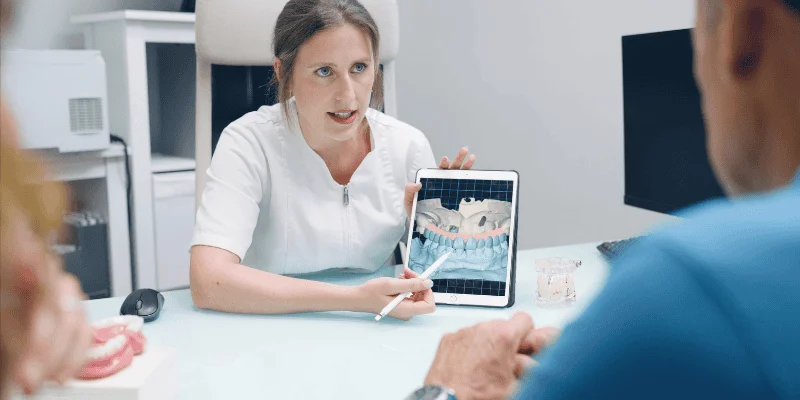
Dental implants work well for most people, but sometimes they fail within the first few months after surgery.
Early dental implant failure usually happens because of infection, poor bone integration, or too much pressure on the implant before it heals. Understanding why this happens can help you avoid problems and keep your implant healthy for years.
The good news is that experienced surgeons know how to spot risk factors before they become serious issues. They use specific techniques and careful planning to give your implant the best chance of success.
When you know what causes early dental implant failure and how doctors work to prevent it, you can feel more confident about your treatment.
Learning the warning signs and prevention steps makes a real difference in your outcome. This guide walks you through everything from common causes of implant failure to what you can do to protect your investment in your smile.
Key Takeaways
- Early implant failure stems from infection, poor bone quality, or excessive force during the healing period
- Surgeons prevent complications through careful planning, proper technique, and identifying patient risk factors before surgery
- Patients play a vital role in success by maintaining good oral hygiene, avoiding smoking, and following all post-surgery instructions
What Is Early Dental Implant Failure?
Early dental implant failure happens when your implant doesn’t bond with your jawbone during the initial healing phase. This differs from problems that show up years later, and knowing the difference helps you spot issues quickly.
Definition and Timeframe
Early dental implant failure means your implant shows movement before your dentist places the final crown or bridge. This typically occurs within the first three to four months after surgery.
The problem happens when your bone doesn’t accept the titanium implant through a process called osseointegration. Your body should naturally fuse the bone to the implant surface during healing. When this doesn’t happen, you’ll notice the implant feels loose or wiggles.
Dentists classify this as a biological problem where the integration process breaks down. Early implant failure may be linked to issues with how your immune system responds to the implant. Sometimes people call this “rejection” of the dental implant, though true rejection is rare with titanium.
Success and Failure Rates
Dental implants work well for most patients. The success rate sits around 95% for lower jaw implants and 90% for upper jaw implants over a five-year period.
Your chances of experiencing early failure are relatively low. Only about 5-10% of all dental implants fail, and early failures make up a portion of that number. The implant failure rate depends on several factors including where the implant goes in your mouth and your overall health.
Upper jaw implants have slightly higher failure rates because the bone is often softer there. Implants placed in the back of your mouth also face more risk than front teeth replacements.
Signs and Symptoms
A failed dental implant shows clear warning signs you shouldn’t ignore. Implant mobility is the most obvious symptom – your implant shouldn’t move at all when you touch it.
Other signs include:
- Pain or discomfort around the implant site
- Swelling or redness in your gums
- Bleeding when you brush near the implant
- Pus or discharge from the gum tissue
- Difficulty chewing on that side
You might also notice your implant feels different or sits at an odd angle. Some people experience a bad taste in their mouth. These early dental implant failure symptoms need immediate attention from your dental surgeon.
Early vs. Late Failure
The timing of implant problems tells your dentist what went wrong. Early failures happen before you get your permanent tooth, while late implant failure occurs one to three years after placement.
Early failures usually result from surgical issues, poor bone quality, or infection during healing. Your body either can’t form new bone around the implant or loses bone that initially formed.
Late failures come from different causes like gum disease around the implant, too much biting force, or teeth grinding. Late problems often develop slowly over months or years.
The treatment differs too. Early failures often mean removing the implant and trying again after your bone heals. Late failures might be fixable with deep cleaning or medication if you catch them soon enough.
Primary Causes of Early Dental Implant Failure
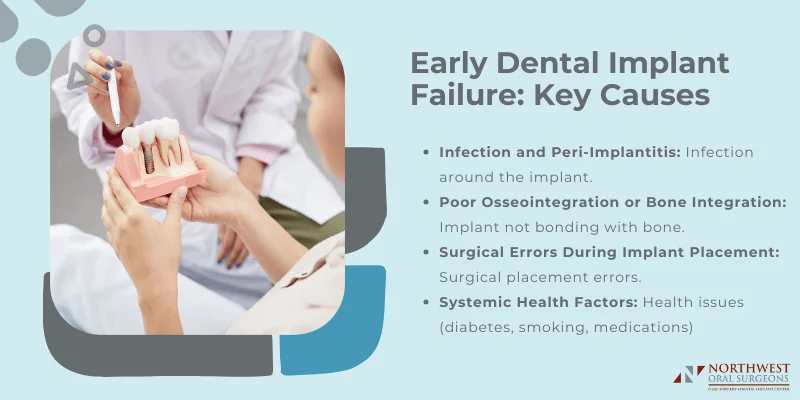
Early implant failure happens when problems occur before the implant fully heals into your jawbone. The main issues include infections around the implant site, problems with bone fusion, mistakes during surgery, and health conditions that affect healing.
Infection and Peri-Implantitis
Infection is one of the most common causes of dental implant failure during the early healing phase. Bacteria can enter the surgical site and prevent proper healing before your implant bonds with the bone.
Peri-implantitis occurs when infection spreads to the tissues and bone surrounding your implant. This condition causes inflammation and can destroy the bone that supports the implant. Poor oral hygiene after implant surgery increases your risk significantly.
Signs of early infection include:
- Swelling or redness around the implant
- Pain that gets worse instead of better
- Bleeding or pus from the surgical site
- A bad taste in your mouth
You can reduce infection risk by following your surgeon’s cleaning instructions carefully. Smoking greatly increases your chance of developing peri-implantitis and should be avoided during healing.
Poor Osseointegration or Bone Integration
Osseointegration is the process where your jawbone grows around and fuses with the titanium implant. When this bone integration fails, the implant becomes loose and cannot support a tooth.
Several factors can prevent proper osseointegration. Insufficient bone density makes it harder for the implant to anchor securely. If you have low bone density, your surgeon might need to perform a bone graft before placing the implant.
Moving the implant too soon also disrupts bone integration. Your jawbone needs several months to grow around the implant properly. Putting pressure on the implant before osseointegration completes can cause it to fail.
Some patients naturally have slower healing processes. Your age, nutrition, and overall health all affect how quickly your bone integrates with the implant.
Surgical Errors During Implant Placement
Mistakes during implant placement can lead to early failure. Placing the implant at the wrong angle or depth affects how well it integrates with your bone.
Overheating the bone during drilling causes tissue damage that prevents proper healing. Experienced surgeons use careful drilling techniques and cooling methods to protect your bone tissue.
Placing an implant too close to nerves can cause nerve damage and complications. Your surgeon should use imaging technology to map out the exact placement before surgery.
Common surgical issues include:
- Incorrect implant size for the available bone
- Inadequate primary stability at placement
- Damage to surrounding teeth or structures
Choosing a skilled surgeon reduces these risks significantly. Ask about your surgeon’s experience and success rates before scheduling the procedure.
Systemic Health Factors
Your overall health plays a major role in dental implant success. Uncontrolled diabetes affects your body’s ability to heal and fight infection, which can prevent proper osseointegration.
High blood sugar levels slow down healing and increase infection risk. If you have diabetes, work with your doctor to control your blood sugar before getting implants.
Certain medications also affect implant success. Bisphosphonates used for osteoporosis can interfere with bone healing. Immunosuppressants and some cancer treatments reduce your body’s healing ability.
Health conditions that increase failure risk:
- Uncontrolled diabetes
- Autoimmune disorders
- Osteoporosis or low bone density
- Blood clotting disorders
Your surgeon needs to know about all your medical conditions and medications. Being honest about your health history helps them plan the best approach for your situation.
Mechanical and Lifestyle Factors
Physical stress on your implant and how well you care for it after surgery can determine whether it integrates properly or fails within the first few months. Your daily habits play a bigger role in early implant failure than most people realize.
Teeth Grinding and Bruxism
If you grind your teeth at night, you’re putting serious stress on your new implant before it has time to bond with your jawbone. Bruxism creates repetitive forces that can prevent proper healing during the critical first months.
Your implant needs stable conditions to integrate with bone tissue. When you grind your teeth, you create micromovement that disrupts this process. The constant pressure can cause the implant to loosen or fail to attach at all.
Most surgeons will ask about your grinding habits during your consultation. If you have bruxism, they’ll likely recommend a custom nightguard to protect your implant. You’ll need to wear this protective device every night, especially during the first six months after surgery.
Some patients don’t even know they grind their teeth until a dentist points out the wear patterns. Your partner might notice the grinding sounds at night, or you might wake up with jaw pain.
Excessive Bite Force and Clenching
Clenching your jaw during the day puts just as much pressure on your implant as nighttime grinding does. Excessive loading on implants occurs when the force placed on them exceeds what the surrounding bone can handle.
You might clench without realizing it, especially when you’re concentrating or stressed. This habit becomes particularly dangerous during the healing phase when your implant hasn’t fully integrated yet.
Your surgeon may adjust how your teeth come together to reduce the force on your new implant. They might also place you on a soft food diet longer than usual if you have a heavy bite. The goal is to protect the implant until it forms a solid connection with your bone.
Poor Oral Hygiene and Aftercare Adherence
Following your aftercare instructions exactly as prescribed makes the difference between success and failure. Your mouth needs to stay clean while your implant heals, but you also need to be gentle around the surgical site.
Poor oral hygiene allows bacteria to build up around your implant and can lead to infection. You’ll need to brush carefully around the area and use any prescribed rinses as directed. Most surgeons recommend chlorhexidine rinses for the first few weeks.
Skipping follow-up appointments or ignoring swelling and discomfort can let small problems turn into implant failure. If you notice any pain, bleeding, or unusual symptoms, you should contact your surgeon right away instead of waiting for your next scheduled visit.
How Surgeons Prevent Early Implant Failure
Skilled surgeons use specific methods to reduce the risk of implant problems. Proper planning before surgery, choosing the right dentist, adding bone when necessary, and using proven surgical methods all work together to improve success rates.
Pre-Surgical Assessment and Planning
Your dentist will examine your mouth carefully before placing any implants. This includes taking X-rays or CT scans to check your bone quality and quantity.
These scans show exactly where nerves and sinuses are located. This helps your dentist avoid damaging important structures during surgery.
Your medical history matters too. Your dentist needs to know about conditions like diabetes or osteoporosis that could affect healing. They’ll also ask about medications you take, especially blood thinners or drugs that affect bone health.
A thorough evaluation includes checking for gum disease. Active infections must be treated before implant surgery begins. Your dentist will also assess whether you smoke, since smoking is a major risk factor for implant failure.
Experienced Implant Dentist Selection
Choosing an experienced implant dentist makes a big difference in outcomes. Dentists with proper training know how to handle complications if they arise during surgery.
Ask about your dentist’s experience with implant procedures. Find out how many implants they’ve placed and what their success rates are.
An experienced dentist knows the right depth and angle to place each implant. They understand how to avoid overheating the bone during drilling, which can prevent proper healing.
Look for dentists who use modern technology like surgical guides. These tools help place implants in the exact position planned during your consultation. You should schedule a consultation with at least one implant specialist to discuss your specific case.
Bone Grafting When Needed
Sometimes your jawbone isn’t thick or tall enough to support an implant. Bone grafting adds material to strengthen weak areas before or during implant placement.
Your dentist might use bone from your own body, a donor, or synthetic materials. The graft needs time to heal and merge with your natural bone.
This extra step takes longer but significantly improves implant stability. Without enough bone support, implants can fail within the first few months.
Sinus lifts are a specific type of bone grafting for upper back teeth. Your dentist adds bone below the sinus cavity to create enough space for the implant.
Advanced Surgical Techniques
Modern surgeons use several techniques to prevent dental implant failure from the start. Proper irrigation during drilling keeps bone temperature low and prevents thermal damage.
Your dentist will place the implant with controlled force to achieve primary stability. The implant needs to be firmly seated but not overtightened, which could crack the bone.
Some dentists use tools that measure implant stability during placement. These devices confirm the implant is secure enough before moving forward.
Careful handling of tissues during surgery promotes faster healing. Your dentist will work to minimize trauma to your gums and bone. They’ll also ensure the surgical area stays clean throughout the procedure to reduce infection risk.
Long-Term Success and Patient Responsibilities
Dental implants need consistent care and attention after placement to maintain their function for decades. Your daily habits and medical management play a direct role in whether your implants remain stable or develop complications.
Daily Oral Hygiene Habits
Your oral hygiene routine determines how well your implants resist infection over time. You need to brush at least twice daily with a soft-bristled toothbrush, paying special attention to where the implant meets your gum tissue.
Plaque buildup around implants can lead to peri-implantitis, which is inflammation and bone loss around dental implants. This condition threatens long-term implant success if left untreated.
Use interdental brushes or water flossers designed for implants to clean hard-to-reach areas between teeth and around abutments. Regular floss works too, but you should be gentle to avoid damaging the soft tissue seal around your implants.
Antimicrobial mouth rinses can reduce bacterial loads, but they should not replace mechanical cleaning with brushing and flossing.
Regular Dental Check-Ups
You should visit your dentist at least twice yearly for professional cleanings and implant evaluations. These appointments allow your dental team to catch early warning signs before they become serious problems.
Your dentist will probe around implants to check for increased pocket depths, which can indicate developing peri-implantitis. They will also take X-rays to monitor bone levels around the implant roots. Early detection of bone loss makes treatment more effective and less invasive.
Professional cleanings remove hardened plaque that you cannot eliminate at home. Your hygienist uses specialized instruments that won’t scratch or damage titanium implant surfaces.
Custom Night Guards for Bruxism
If you grind or clench your teeth at night, you need a custom night guard to protect your implants from excessive forces. Bruxism creates stress that can loosen implant components or cause bone loss over time.
A custom-fitted guard from your dentist provides better protection than store-bought versions. It distributes biting forces evenly across your teeth and implants while you sleep. This reduces the risk of mechanical complications that could compromise your implants.
Your dentist should check your night guard regularly for wear and replace it when needed. A worn guard loses its protective ability and may need replacement every few years depending on the severity of your grinding.
Managing Medical Conditions
Your overall health directly affects your implants’ ability to stay integrated with your jawbone. Uncontrolled diabetes increases infection risk and slows healing around implants.
You need to keep your blood sugar levels within target ranges set by your doctor. High glucose levels impair your immune response and make it harder for your body to fight bacteria around implant sites.
Osteoporosis medications, especially bisphosphonates, can affect bone healing and implant stability. Tell your dentist about all medications you take so they can adjust your treatment plan accordingly.
Smoking dramatically reduces implant success rates by restricting blood flow to your gums and bone. Quitting smoking gives your implants the best chance at long-term survival.
What To Do If You Suspect Implant Failure
Acting quickly when you notice problems with your dental implant can make the difference between saving or losing it. Getting professional evaluation and understanding your treatment options helps protect your investment and oral health.
Recognizing Warning Signs
You need to watch for specific symptoms that indicate your implant might be failing. Pain around the implant site is one of the most common early indicators, especially if it persists beyond the normal healing period.
Swelling or redness in your gums near the implant signals inflammation. If you notice bleeding when brushing or see pus discharge, these are signs of dental implant failure that require immediate attention.
A loose or moving implant is never normal. Your implant should feel as stable as a natural tooth. Difficulty chewing or biting down can point to problems with how the implant attached to your bone.
Other warning signs include an unpleasant taste in your mouth or visible recession of the gum tissue around the implant. Any of these symptoms warrant a call to your dentist.
Seeking Prompt Professional Help
You should contact your dentist or oral surgeon as soon as you notice any warning signs. Early intervention often makes the difference in treating a failing implant versus losing it completely.
Your dentist will examine the implant and take X-rays to check the bone structure. They’ll measure the depth of pockets around the implant and test its stability. This evaluation helps determine whether you’re experiencing implant rejection or another complication.
Don’t wait for symptoms to worsen. What starts as mild inflammation can progress to serious infection and bone loss. The faster you get professional help, the more treatment options you’ll have available.
Be prepared to discuss your symptoms in detail, including when they started and how they’ve changed. Mention any recent injuries, illnesses, or changes in your medications.
Options for Treatment and Replacement
Your treatment depends on the cause and severity of the dental implant failure. For infections like peri-implantitis, your dentist may clean the implant surface and prescribe antibiotics. They might use laser therapy or special cleaning procedures to remove bacteria.
If the implant hasn’t fully failed, treatments can include deep cleaning, medication, or minor surgical procedures to regenerate bone. These approaches work best when you catch problems early.
A failed dental implant that’s loose or severely infected usually needs removal. Your dentist will remove it carefully to preserve as much bone as possible. After removal, you have several options for replacement.
You might receive a new implant immediately if enough healthy bone remains. In other cases, your dentist will place a bone graft first and wait for healing before inserting a new implant. Some patients choose alternative options like bridges or partial dentures instead of replacing the implant.
Frequently Asked Questions
Patients often have questions about what happens when implants don’t work as planned and how to spot problems early. Understanding the warning signs and your options can help you make informed decisions about your dental care.
What are the early signs of dental implant failure?
You might notice pain or discomfort around the implant site that doesn’t go away. Swelling, redness, or bleeding gums near the implant are also warning signs you shouldn’t ignore.
Loose or moving implants indicate a serious problem that needs immediate attention. Your implant should feel stable and secure like a natural tooth.
Other signs include difficulty chewing or an unpleasant taste in your mouth. If you notice any of these symptoms, contact your dentist right away for an evaluation.
Can you get a refund if your dental implant fails?
Your ability to get a refund depends on several factors. Many dental practices offer warranties or guarantees on implant procedures that may cover replacement costs.
You should review your treatment agreement carefully before the procedure. Some practices provide coverage for complications within a specific timeframe.
Who is responsible for implant failure often depends on the cause. If the failure resulted from surgical error or faulty materials, you may have grounds for a refund or replacement at no cost.
Is it common for dental implants to fail after 10 years?
Dental implants have success rates exceeding 95%, making long-term failure relatively uncommon. Most implants that are properly cared for can last 20 years or more.
Late failures after 10 years usually happen due to factors like poor oral hygiene or health changes. Conditions such as gum disease or bone loss can affect even well-established implants.
Regular dental checkups and good oral care help your implants last longer. Your commitment to maintenance plays a big role in preventing late-stage failures.
What are the primary reasons for early dental implant failures?
Poor bone integration is a leading cause of early implant failure. If your jawbone doesn’t fuse properly with the implant, it won’t stay secure.
Infection at the implant site can prevent proper healing. Bacteria can enter during or after surgery, stopping the bone from attaching to the implant.
Inadequate bone quality or quantity makes it harder for the implant to integrate. Your surgeon needs enough healthy bone to support the implant during the healing process.
What is the most frequent cause of dental implant complications?
Infection is the most common and preventable cause of dental implant problems. Bacterial infections can occur at any point during or after treatment.
Poor oral hygiene allows bacteria to build up around the implant. This can lead to peri-implantitis, an inflammatory condition that damages the surrounding tissue and bone.
Smoking significantly increases your risk of infection and complications. Tobacco use interferes with blood flow and slows down the healing process needed for successful integration.
How does one deal with osseointegration failure in dental implants?
Osseointegration failure means the implant didn’t fuse with your jawbone. Your dentist will need to remove the failed implant to prevent further bone loss.
After removal, you’ll need time for the site to heal completely. Your dentist may recommend bone grafting to rebuild the area before placing a new implant.
The replacement approach depends on your specific situation. Some patients can receive a larger diameter implant right away, while others need a staged procedure that allows for healing before reimplantation.