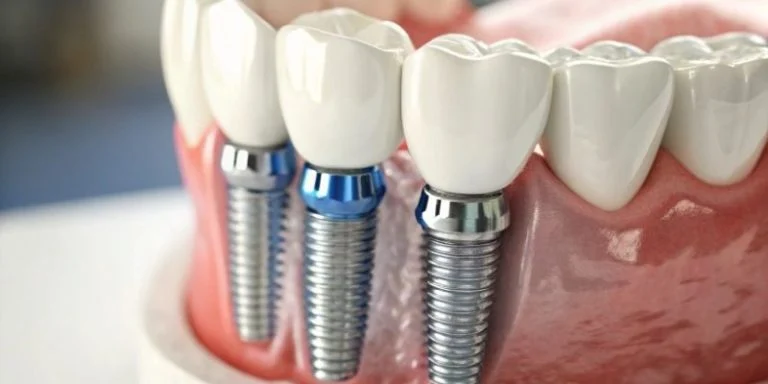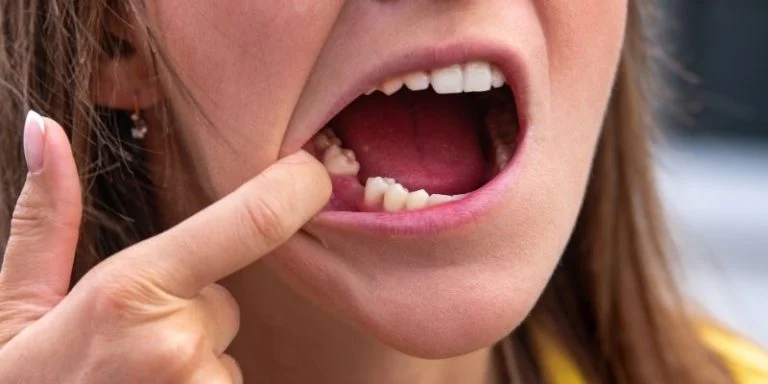


Getting a dental implant isn’t always as simple as placing it where a missing tooth used to be. Sometimes the tooth that needs replacing is still there but damaged beyond repair.
In these cases, I need to help patients understand when removing the tooth first is actually the smart move for long-term success. Tooth extraction before implant placement is often necessary when infection, bone loss, decay, or structural damage would compromise the implant’s stability and durability.
Making the right choice about extraction timing can mean the difference between an implant that lasts decades and one that fails within years. Understanding why extraction might be your best option helps you make informed decisions about your dental health.
The tooth extraction and implant timeline varies based on your specific situation. Knowing the reasons behind each step puts you in control of your treatment plan.
Key Takeaways
- Extraction becomes necessary when infection, severe decay, or bone loss would prevent proper implant integration
- The timing between extraction and implant placement depends on your bone quality, healing capacity, and whether infection is present
- Proper evaluation and pre-implant procedures like bone grafting significantly increase your chances of long-term implant success
Key Reasons Tooth Extraction May Be Necessary Before Implant Placement
Not every tooth can stay in place before implant placement. Sometimes I need to remove a damaged or diseased tooth to create the best foundation for a successful dental implant.
Severe Decay and Irreparable Tooth Damage
When a tooth has extensive decay that reaches deep into the root, I often find that saving it becomes impossible. Cavities that have destroyed most of the tooth structure leave nothing solid for an implant to anchor beside.
Irreparable damage requires tooth extraction to ensure dental implants have a healthy base. A severely damaged tooth can’t support the area around an implant.
The decay can spread to surrounding bone and tissue. Cracks that extend below the gum line also make extraction necessary.
These fractures allow bacteria to enter and compromise the jaw bone that will hold the future implant.
Infection and Gum Disease Risks
Active infections pose serious threats to implant success. When gum disease progresses to periodontal disease, it destroys the bone and tissue that support teeth.
I must address these infections before preparing the jaw for dental implants. Bacteria from infected teeth can spread to the implant site and cause failure.
Advanced periodontal disease often loosens teeth to the point where they can’t remain. Removing infected teeth eliminates the source of bacteria.
This creates a clean environment for healing. I wait for the infection to clear completely before moving forward with implant placement.
Your oral health depends on getting rid of diseased tissue first. Placing an implant next to an infected tooth would be like building on a crumbling foundation.
Structural Issues and Failed Restorations
Sometimes teeth have old crowns, bridges, or fillings that have failed beyond repair. These failed restorations can create alignment problems that interfere with proper implant positioning.
I encounter spacing issues where teeth are too crowded for successful implant placement. Teeth that sit in the wrong position can block the ideal angle for an implant.
Extraction creates the necessary room. Misaligned teeth also affect how your bite functions with the new implant.
I need to ensure proper spacing so the implant crown fits naturally with your other teeth. Some patients need multiple extractions to correct structural problems before their tooth extraction and implant procedure can begin.
Evaluating Candidacy: Factors That Influence Extraction Over Retention
When I evaluate whether to extract a tooth before implant placement, I consider several critical factors that directly impact treatment success. The condition of your jawbone, your overall health status, and detailed diagnostic imaging all play essential roles in determining the best path forward.
Bone Quality and Jawbone Health
I always start by assessing your bone density and bone volume at the potential implant site. If your jawbone has experienced significant deterioration from infection or long-term tooth damage, extraction might be the better choice.
Poor bone quality creates an unstable foundation for both natural teeth and future implants. When a compromised tooth has caused ongoing bone loss, removing it allows me to address the underlying problem and potentially perform bone grafting procedures.
I look at the thickness and height of your jawbone during the initial consultation. Teeth with severe periodontal disease often have surrounding bone that’s too weakened to support the tooth long-term.
In these cases, extraction followed by bone regeneration techniques gives us a stronger foundation for implant placement. The jawbone needs adequate volume in all dimensions for successful implant integration.
If keeping a failing tooth will continue to compromise bone structure, early extraction preserves more of your natural bone for future restoration.
Medical Considerations and Systemic Conditions
Your overall health significantly impacts my recommendation between retention and extraction. Conditions like diabetes and osteoporosis affect both tooth prognosis and implant success rates.
If you have uncontrolled diabetes, your body’s ability to fight infection and heal properly is compromised. A tooth with questionable prognosis poses ongoing infection risks that can be particularly dangerous for diabetic patients.
Osteoporosis affects bone density throughout your body, including your jawbone. I need to consider whether medications you’re taking for osteoporosis might affect healing after extraction or implant placement.
During treatment planning, I evaluate how systemic conditions interact with your dental health. Some medical situations make maintaining a compromised tooth riskier than proceeding with extraction and implant therapy.
Imaging and Treatment Planning Insights
Advanced imaging during your implant consultation reveals details I can’t see during regular dental check-ups. Radiographic evaluation helps me assess factors like root structure, bone defects, and infection extent.
Three-dimensional cone beam CT scans show me the exact bone volume available and identify hidden problems like root fractures or periapical lesions. This detailed view helps me determine if a tooth is truly salvageable.
I examine the relationship between compromised teeth and surrounding structures during treatment planning. Sometimes imaging reveals that keeping a failing tooth will jeopardize adjacent healthy teeth or limit future implant placement options.
The imaging also shows me the quality of existing bone and helps predict healing potential after extraction. This information is crucial for timing both the extraction and subsequent implant placement procedures.
For precise implant planning using advanced imaging, schedule a consultation at our Schererville, IN office. A detailed evaluation can help determine the safest and most effective path to implant success.
Timing Strategies: Immediate vs. Delayed Implant Placement After Extraction
When you lose a tooth, the timing of your dental implant placement can significantly affect your treatment outcome. The main options include placing the implant right away during extraction, waiting a few weeks for early placement, or allowing several months for complete healing before starting the implant process.
Immediate Implant Placement: Advantages and Criteria
Immediate implant placement means I can put your implant in during the same appointment as your tooth extraction. This approach has high survival rates ranging from 93.8% to 100%, making it a reliable option when conditions are right.
The biggest advantage is convenience. You need fewer appointments and less overall treatment time.
Instead of waiting months between extraction and implant placement, we complete both procedures in one visit. However, immediate placement works best under specific conditions.
You need healthy bone at the extraction site with enough volume to support the implant. Your gums should be free from infection or disease.
The tooth socket must allow for proper implant positioning. Ideal candidates for immediate placement include:
- Patients with adequate bone density and volume
- No active infection at the extraction site
- Good overall oral health
- Front teeth where esthetics matter most
I should mention that immediate placement carries a higher risk of complications like gum recession. This is why careful patient selection matters so much.
Delayed Implant Placement: When Waiting Is Best
Delayed implant placement means waiting more than four months after extraction before placing your implant. This is the most commonly used protocol and shows survival rates between 92% and 100%.
The healing period gives your bone time to fill in the extraction site. This creates a more stable foundation for the implant.
Osseointegration, which is how the implant fuses with your bone, often works better when the site has fully healed. I recommend delayed placement when you have bone loss around the extraction site.
It’s also better if you had an infection or if the extraction was complicated. Waiting allows me to address these issues before placing the implant.
Benefits of delayed placement:
- More predictable outcomes
- Lower complication rates
- Time to rebuild bone if needed
- Better suited for complex cases
The main drawback is time. You’ll need at least two separate procedures—one for extraction and another for implant placement months later.
Same-Day Implants and Early Placement Options
Early implant placement falls between immediate and delayed options. This typically means placing your implant 4 to 16 weeks after extraction.
Studies show survival rates of 95% to 100% with this timing. Same-day implants refer to immediate placement combined with immediate loading.
This means you get both the implant and a temporary crown on the same day. Not everyone qualifies for this approach, but it offers the fastest path to a functional tooth.
Early placement gives your soft tissue time to heal while preventing excessive bone loss. The socket partially fills with new bone, providing better stability than immediate placement.
You avoid some risks of immediate placement while cutting months off the delayed timeline. Early placement works well when:
- Soft tissue needs healing but bone is adequate
- Initial infection has cleared
- You want faster treatment than delayed placement
- The extraction site is healing normally
The dental implant timeline I choose for you depends on your specific situation. Your bone quality, medical history, and treatment goals all play a role in determining the best timing strategy.
Pre-Implant Procedures Supporting Long-Term Success
Proper preparation of the extraction site directly impacts whether your implant will last for decades. Bone grafting and socket preservation prevent bone resorption, while sinus lifts and soft tissue management create the foundation needed for stable implant placement.
Bone Grafting and Socket Preservation
When I extract a tooth, the surrounding bone begins to shrink almost immediately. Socket preservation involves placing bone graft material into the empty socket right after extraction to help maintain ridge shape and volume.
Without preservation, normal post-extraction healing can result in approximately 30–60% loss of alveolar ridge width within the first year, according to clinical studies on alveolar bone resorption.
I use different types of bone graft materials depending on your specific needs:
- Autograft: Your own bone from another area
- Allograft: Donor bone from a tissue bank
- Xenograft: Bone from animal sources (usually bovine)
- Synthetic graft: Lab-created bone substitute materials
A membrane often covers the graft to protect it and guide bone healing. The bone healing process typically takes 3-6 months before I can place your implant.
Studies show that bone regeneration techniques improve the long-term prognosis of the treatment site, making socket preservation a standard practice for optimal outcomes.
Sinus Lift Procedures and Soft Tissue Management
When you need an implant in your upper back jaw, there may not be enough bone height between your jawbone and the sinus cavity. I perform sinus lifts to create adequate space by gently lifting the sinus membrane and placing bone graft material underneath.
This procedure adds the vertical bone dimension necessary for proper implant stability. Soft tissue management is equally important for long-term success.
I ensure you have adequate attached gingiva (thick, stable gum tissue) around the future implant site. Healthy soft tissues protect the bone and implant from bacteria and mechanical stress.
Soft tissue healing typically occurs within 2-4 weeks, though complete integration with bone graft takes longer. The entire dental implant process can take 6 to 12 months when including these pre-implant procedures.
If you’ve been told you may need a sinus lift before implants, book a visit at our Schererville, IN office.
The Extraction and Implant Process: Step-by-Step Overview
The journey from tooth extraction to a finished dental implant involves several carefully planned stages. Each phase builds on the previous one to create a stable foundation for your new tooth.
Tooth Extraction Procedure

When I need a tooth removed before implant placement, the tooth extraction process begins with numbing the area. My dentist applies local anesthesia to block pain signals from the extraction site.
For patients who feel anxious, sedation options like nitrous oxide or oral sedatives help me stay relaxed during the procedure. The actual extraction takes between 20 and 45 minutes depending on the tooth’s condition.
My dentist gently loosens the tooth from its socket using specialized instruments. If the tooth has broken or hasn’t fully erupted, I might need a surgical extraction where the dentist makes a small incision in my gum tissue.
After removal, my dentist examines the empty socket to check for any remaining debris or infection. They may place bone grafting material in the socket to preserve the bone structure while it heals.
Post-Extraction Healing and Care
Post-extraction care during the first 24 hours is critical for proper healing. I need to bite down on gauze pads for 30 to 45 minutes to help blood clots form in the socket.
These clots protect the bone and nerves underneath. My dentist tells me to avoid drinking through straws, smoking, or spitting forcefully because these actions can dislodge the clot.
I stick to soft foods like yogurt, mashed potatoes, and smoothies for the first few days. I also rinse my mouth gently with warm salt water starting 24 hours after extraction.
The healing process typically takes several months before my jawbone is ready for an implant. My dentist schedules follow-up appointments to monitor how the tissue is recovering.
Dental Implant Surgery and Restoration Stages
Once my jaw has healed, dental implant surgery begins with another round of local anesthesia. My dentist makes a small incision in my gum to expose the bone, then drills a precise hole for the implant post.
The titanium implant post gets screwed into my jawbone where it will fuse with the bone over time. After placing the implant, my dentist attaches either a healing abutment or healing cap on top.
This small metal piece keeps the gum tissue shaped properly while the implant integrates with my bone. Some patients receive a temporary restoration to maintain their smile during the healing period.
The implant procedure requires three to six months for complete osseointegration. Once healed, my dentist takes impressions for the final restoration placement.
They attach a permanent abutment to the implant, then secure the crown restoration on top. The crown placement completes my new tooth, giving me a natural-looking replacement that functions like my original tooth.
Cost, Recovery, and Maximizing Implant Success
Understanding the financial aspects and recovery requirements helps you prepare for the dental implant process. Proper care ensures your investment lasts for decades.
Dental Insurance and Financing Approaches
Most dental insurance plans cover a portion of tooth extraction costs, but implant coverage varies significantly between providers. I recommend checking whether your plan classifies dental implants as a medically necessary procedure or cosmetic treatment, as this affects reimbursement rates.
Many patients use Care Credit or similar healthcare financing options to manage out-of-pocket expenses. These programs often offer interest-free periods if you pay the balance within 6 to 24 months.
Some implant dentists also provide in-house payment plans that spread costs across several months. The total treatment timeline can range from same-day placement to several months depending on your oral health and bone density.
Getting pre-approval from your insurance company before starting treatment helps avoid unexpected bills. I suggest requesting a detailed cost breakdown that includes extraction, bone grafting if needed, implant placement, abutment, and the prosthetic tooth.
Reducing Risks and Enhancing Healing
Following proper post-operative care instructions significantly improves implant stability and reduces complications. I need to avoid smoking, maintain a soft food diet for the first week, and take prescribed antibiotics to prevent infection.
Applying ice packs during the first 24 hours minimizes swelling, while gentle saltwater rinses after meals keep the surgical site clean. Avoid touching the implant area with your tongue or fingers, as this introduces bacteria that compromise healing.
Bone tissue starts resorbing soon after a tooth is removed, which is why timing matters for implant success. My implant dentist will monitor healing progress through follow-up appointments to ensure the implant integrates properly with my jawbone.
Most patients experience initial healing within 7 to 10 days, though complete osseointegration takes 3 to 6 months.
Long-Term Implant Care and Follow-Up
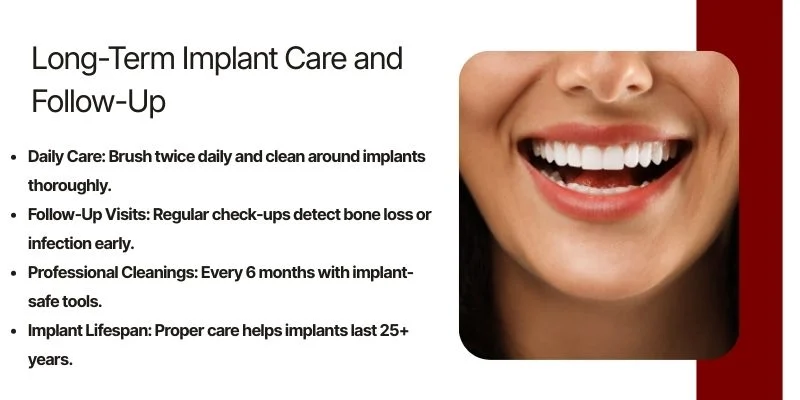
Maintaining excellent oral hygiene protects my investment and extends the life of dental implants. I should brush twice daily with a soft-bristled toothbrush and use interdental brushes or water flossers around the implant area.
Regular follow-up appointments with my implant specialists allow early detection of potential issues like peri-implantitis or bone loss. These visits typically occur at 1 week, 1 month, 3 months, and then every 6 months during the first year.
Professional cleanings every 6 months remove plaque buildup that home care might miss. I need to inform my dental hygienist about my implants so they use appropriate tools that won’t scratch the implant surface.
Avoiding hard foods like ice or hard candy prevents damage to both the prosthetic tooth and the underlying implant structure. With proper implant care, my dental implants can last 25 years or longer.
Protect your investment with the right follow-up care. Book a visit at our Schererville, IN office to keep your dental implants healthy and long-lasting.
Frequently Asked Questions
Patients often have concerns about timing, costs, and alternatives when considering tooth extraction and implant placement. Recovery expectations and long-term bone health also play important roles in treatment decisions.
What are the benefits of getting a dental implant soon after a tooth extraction?
Getting a dental implant soon after extraction helps preserve your jawbone. When I remove a tooth, the bone in that area starts to shrink because it no longer gets stimulation from the tooth root.
Immediate implant placement helps preserve bone volume and maintains the natural shape of your gum tissue. This is especially important in the front of your mouth where appearance matters most.
Early placement also reduces your overall treatment time. Instead of waiting months for healing before placing an implant, you can move forward with your tooth replacement faster.
Can I receive a dental implant years after having a tooth extracted?
I can place a dental implant years after extraction, but you may face additional challenges. The bone in the empty space often shrinks over time, which can make implant placement more difficult.
If significant bone loss has occurred, I might need to perform a bone graft first. This adds time and cost to your treatment.
As long as you have adequate bone and healthy gums, dental implants can still work well even after years of being without a tooth. I just need to evaluate your bone density and overall oral health carefully.
How does the cost of a tooth extraction compare with the cost of a subsequent implant?
A tooth extraction typically costs much less than a dental implant. Extractions are usually a few hundred dollars, while implants can range from several thousand dollars for the complete restoration.
The implant cost includes the titanium post, the abutment that connects to the post, and the crown that replaces your visible tooth. If you need additional procedures like bone grafting, the total cost increases.
Many dental insurance plans cover at least part of the extraction cost. Implant coverage varies widely, so I recommend checking your specific plan benefits.
Is it possible to have a tooth extracted and an implant placed on the same day, and what does the recovery look like?
Most patients qualify for immediate implants when conditions are right. I can place an implant during the same appointment as your extraction if you have healthy bone, no active infection, and adequate bone width.
Recovery from same-day procedures is similar to a standard extraction. You’ll experience some swelling and discomfort for the first few days, which typically peaks around day three.
I recommend taking it easy for about a week and eating soft foods. You should avoid putting pressure on the implant site while it heals.
Most patients return to normal activities within a few days, though complete healing takes several months.
Are there any risks or complications associated with delaying a dental implant after a tooth has been removed?
The main risk of delaying an implant is bone loss. After I extract a tooth, you can lose up to 25% of bone width in the first year alone.
The timeline for placing a dental implant after an extraction can vary depending on your bone structure and healing. Waiting too long may require bone grafting procedures that could have been avoided with earlier placement.
Your neighboring teeth may also shift into the empty space over time. This can affect your bite and make implant placement more complicated later.
Bone loss in one area can also affect the surrounding teeth and facial structure. Some patients experience changes in their facial appearance when significant bone loss occurs.
Is it always necessary to replace an extracted tooth with an implant, or are there alternatives?
I don’t always recommend replacing every extracted tooth. It depends on which tooth you lost.
Molars and visible front teeth usually need replacement. Some back teeth may not require it.
Alternatives to implants include dental bridges and partial dentures. A bridge uses your neighboring teeth as anchors to support a replacement tooth.
A partial denture is a removable appliance. Each option has different benefits and drawbacks.
Bridges require modifying healthy adjacent teeth. Dentures can be less stable than implants.
They’re typically less expensive and require shorter treatment times. Some patients choose not to replace certain back teeth at all.
I generally don’t recommend this approach because it can lead to bone loss, tooth shifting, and bite problems over time.